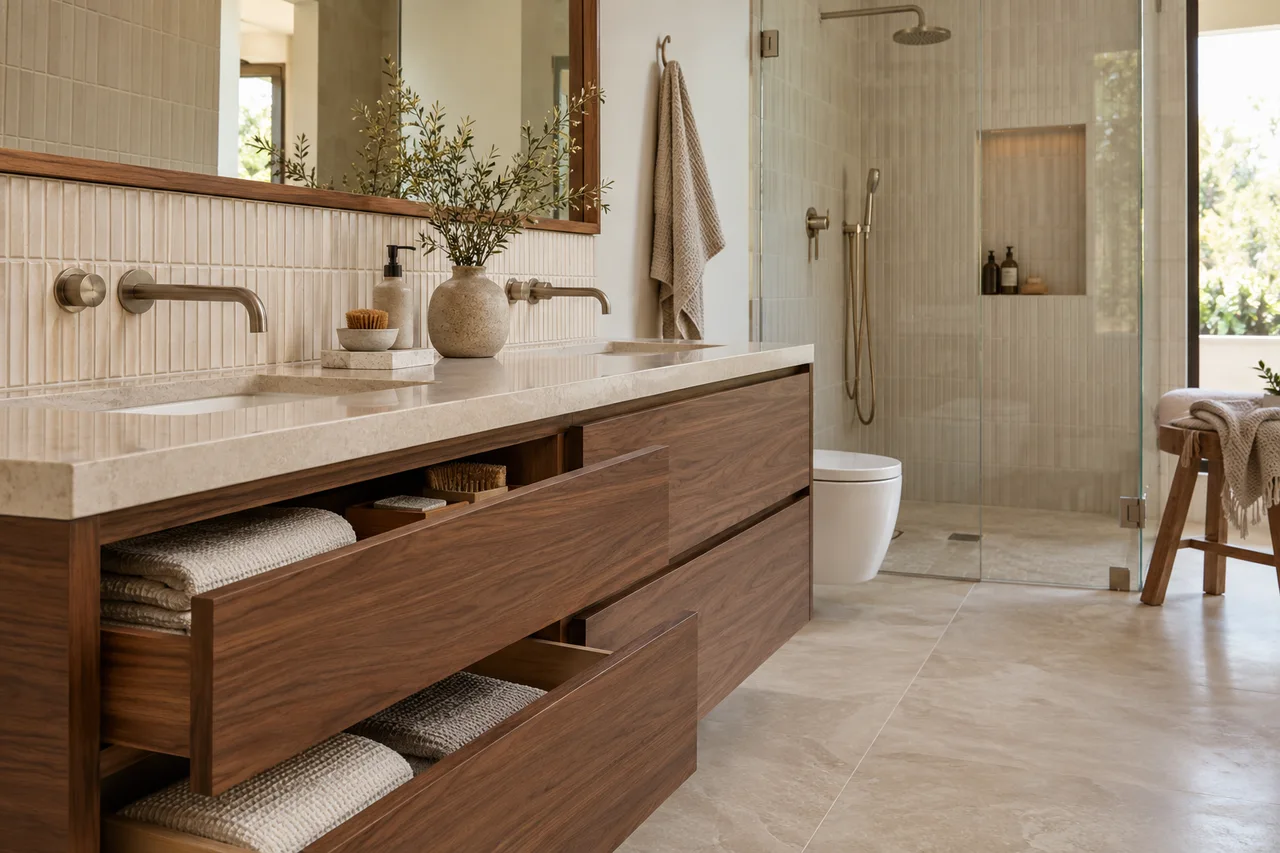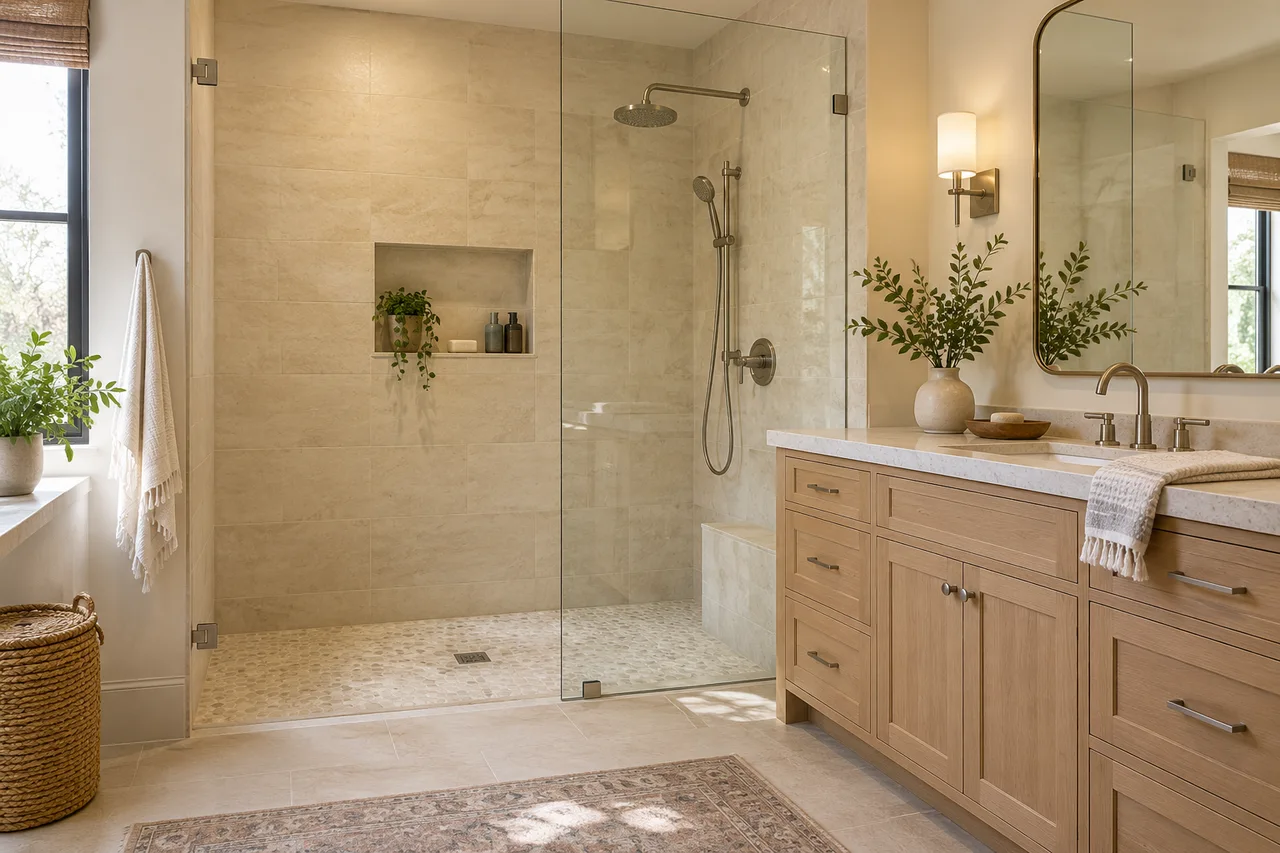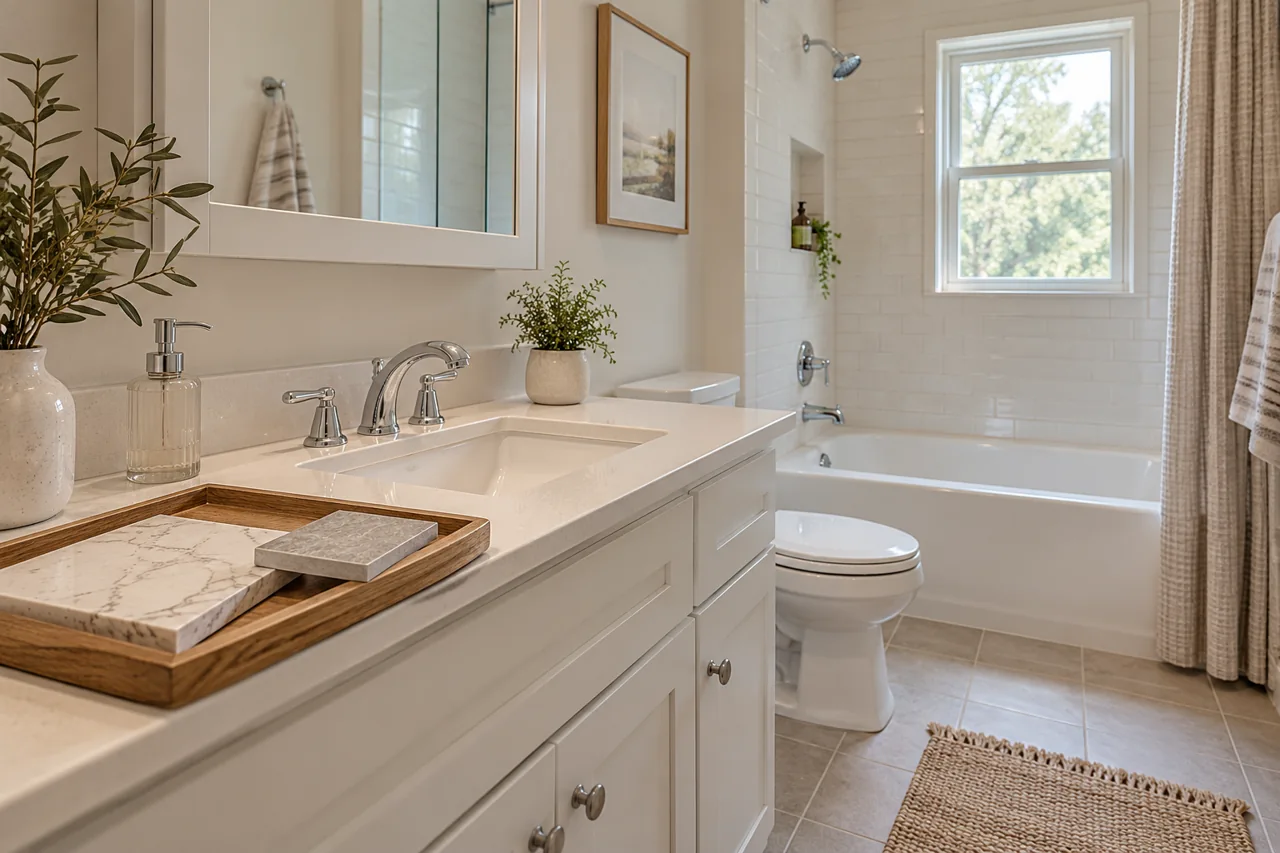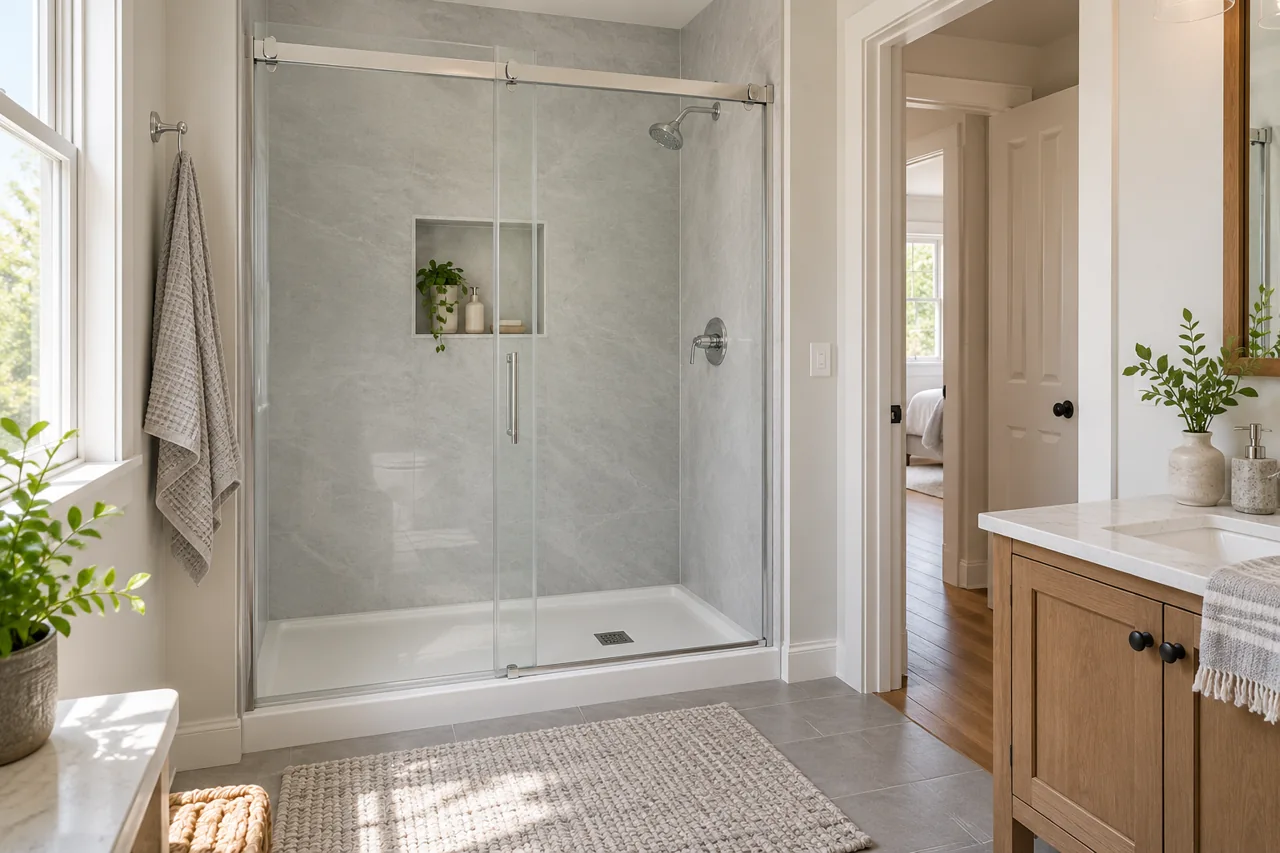
This Old House’s 2026 guide lists tub-to-shower conversion at $2,000–$12,000. The Home Depot currently displays a $12,500–$18,000 total range, while also citing $8,000–$15,000 for wet-area work including materials and labor. These are different published benchmarks, not comparable quotes or a single blended market average.
BEFORE YOU HIRE
Don’t overpay for your bathroom remodel.
Connect with bathroom contractors and compare the work, reviews and quote before you commit.
Check my contractor optionsPublished tub-to-shower conversion prices span very different scopes. This Old House’s 2026 guide lists $2,000–$12,000. The Home Depot’s current conversion page displays $12,500–$18,000 as its total-cost range, but also cites $8,000–$15,000 for wet-area work including materials and labor. We rechecked these figures on November 2, 2026; all amounts are U.S. dollars.
Do not collapse those numbers into an “average conversion price.” First identify the complete installed job: removing the tub, preparing the space, supplying and installing the shower, and finishing everything affected. Then separate your optional choices from that base.
What each published price actually tells you
| Published source | Amount | Important definition |
|---|---|---|
| This Old House, 2026 guide | $2,000–$12,000 | Its editorial conversion range, informed by project/material research and a homeowner survey. |
| The Home Depot, total-cost heading | $12,500–$18,000 | Its currently displayed conversion total range. |
| The Home Depot, wet-area discussion | $8,000–$15,000 | Another range on the same page, expressly including materials and labor. |
The Home Depot does not reconcile its two figures on that page. Treat that difference as a reason to request a defined scope, not permission to invent a midpoint. This Old House says its January 2026 survey covered 1,000 U.S. homeowners who had renovated bathrooms during the previous five years; some projects included other bathroom work. Its methodology also draws on Homewyse and The Home Depot estimates. These sources do not describe a set of identical standalone conversions, and the two publishers’ price figures are not fully independent evidence.
A shower product and an installed conversion are different purchases
A boxed base-and-wall system can be one part of the job. A product listing does not tell you who removes the old tub, whether the existing conditions are suitable, what connections need work or how the surrounding room will be finished. Keep the product subtotal visible, but do not present it as the cost of the completed bathroom.
Use a simple boundary test: when the quoted work ends, can the agreed shower be used and is the disturbed surrounding area finished? If a separate plumber, glass installer or painter is needed, identify that responsibility and its price before treating the proposal as complete.
Ask for the conversion path you actually want
| Path | What to describe | Question that changes the price discussion |
|---|---|---|
| System in the existing tub space | Named base, wall system, fittings and entry arrangement. | Which preparation and connection work is included for this room? |
| Custom-finished shower | Dimensions, complete assembly, finish pattern, storage and enclosure. | Which choices remain allowances, and which are fixed selections? |
| Conversion plus room changes | Shower work plus the exact floor, wall, vanity or layout changes. | What is the conversion price separately from the rest of the room? |
These paths are a way to request clearer pricing. They are not three guaranteed national packages. If you have not resolved the physical scope, use our conversion planning checklist, then return to the cost decisions here.
Separate the base job from the upgrade price
Ask for an acceptable base configuration before adding every attractive feature. Then request the installed difference for each option: a different enclosure, added storage, another finish or a changed entry. The useful number is the effect on the entire agreed job, not only the shelf price of the upgraded component.
Here is a hypothetical arithmetic example, not a contractor quote or typical conversion price. Suppose a defined base proposal is $11,800, and the contractor offers the following separately priced choices.
| Choice | Example installed change | Running project price |
|---|---|---|
| Defined base conversion | Starting example | $11,800 |
| Chosen enclosure upgrade | +$1,400 | $13,200 |
| Chosen storage detail | +$450 | $13,650 |
| Finish upgrade declined | $0 added | $13,650 |
Holding another $1,500 uncommitted would make the household’s example spending plan $15,150, while the agreed project price remains $13,650. A reserve is not an upgrade, a deposit or an automatic contractor charge. Avoid adding a quoted option twice if the base proposal has already been revised to include it.
Identify work that has not been priced yet
Ask the contractor to distinguish three things: work included at a fixed amount, a selection allowance awaiting your decision, and conditions that cannot yet be confirmed. They create different budget questions. An allowance needs a product choice. An unknown condition needs an inspection or a written process for approving additional work.
Request clear answers about removal and disposal, drain and valve work, wall preparation, the shower assembly, glass, permits where required, and making the nearby floor and walls complete. These are questions to resolve for your property, not a claim that every conversion needs the same work.
How to read a low advertised conversion price
Ask what configuration qualifies, which area the price serves, when the offer expires and what is mandatory but extra. If the promotion uses a monthly payment, obtain the total price and financing terms separately. A manageable payment does not establish a lower project cost.
For an owner-supplied product, ask whether the installer accepts that exact model, who verifies dimensions, and what happens if a missing or damaged part interrupts work. A purchase that looks cheaper on the receipt may create another responsibility you need to manage.
Download a scope record before asking for the final price
Two conversion prices become comparable when they describe the same finished job. Open the printable tub-to-shower scope record and keep one copy beside each proposal. It captures the proposal version, the shower boundary, selections, surrounding work and unresolved responsibilities without inventing prices for missing items.
| Decision | Put this in the record | Resolve before relying on the price |
|---|---|---|
| Wall system | Exact panel or tile assembly, backing, base connection and finishing boundary | Who supplies and completes each part? Use the panel-versus-tile comparison if the proposals use different finishes. |
| Entry and floor | Chosen base, drain and entry approach; surrounding floor work | Which existing conditions are confirmed? Bring a proposed level entry into the curbless floor-height check. |
| Bathing decision | A shower conversion, or a replacement that keeps a bathtub | Have both bidders priced the same result? If you are keeping a bath, use the bathtub replacement scope guide instead. |
For every row, record included, excluded, allowance or unresolved. Keep the contractor's wording and name the person who will answer an open question. A blank is not a zero-cost inclusion. When an answer changes the work or price, attach the revised written proposal and date rather than silently editing the old total.
Keep option changes, selection allowances and your household reserve in separate spaces. The record does not calculate a new quote; it shows which decisions still prevent an honest comparison. Once those answers are in writing, return to the quote comparison tool for the known figures.
Choose a price you can explain
Put the complete base conversion beside the few upgrades that matter most to you. Keep the rest of the room in a separate line. You can then see whether the price is buying a better daily experience or simply a longer selection list.
Use the quote comparison worksheet when two proposals use different inclusions. The goal is not to force every contractor inside an online range. It is to understand the installed job, the choices that move its price and the amount you are committing before work begins.
Questions homeowners ask
What is the average cost to convert a tub to a shower?
The published benchmarks in the table use different scopes and research methods. Ask for the complete installed conversion and separately priced options; do not combine unrelated published ranges into a new average.
Does a shower-kit price include installation?
Do not assume it does. A product listing and an installed proposal are different offers. Identify removal, preparation, connections, installation and finishing before comparing the kit price with a complete conversion.
Does keeping the shower in the old tub space guarantee a low price?
No. Ask the contractor to evaluate the actual opening, existing conditions and chosen shower system. Retaining the location does not by itself establish which related work is required or included.
Should the conversion quote include the rest of the bathroom?
Only if that is the agreed scope. Request the shower conversion and any vanity, floor, wall or layout changes as identifiable parts of the proposal so you understand what each decision adds.
Sources & further reading
Primary sources support the factual points in this guide. Local rules and project requirements can change; use the linked authority for a current decision.
MAKE YOUR NEXT MOVE
Don’t overpay for your bathroom remodel.
Connect with bathroom contractors and compare the work, reviews and quote before you commit.
Check my contractor options Already have bids? Compare them here ↗