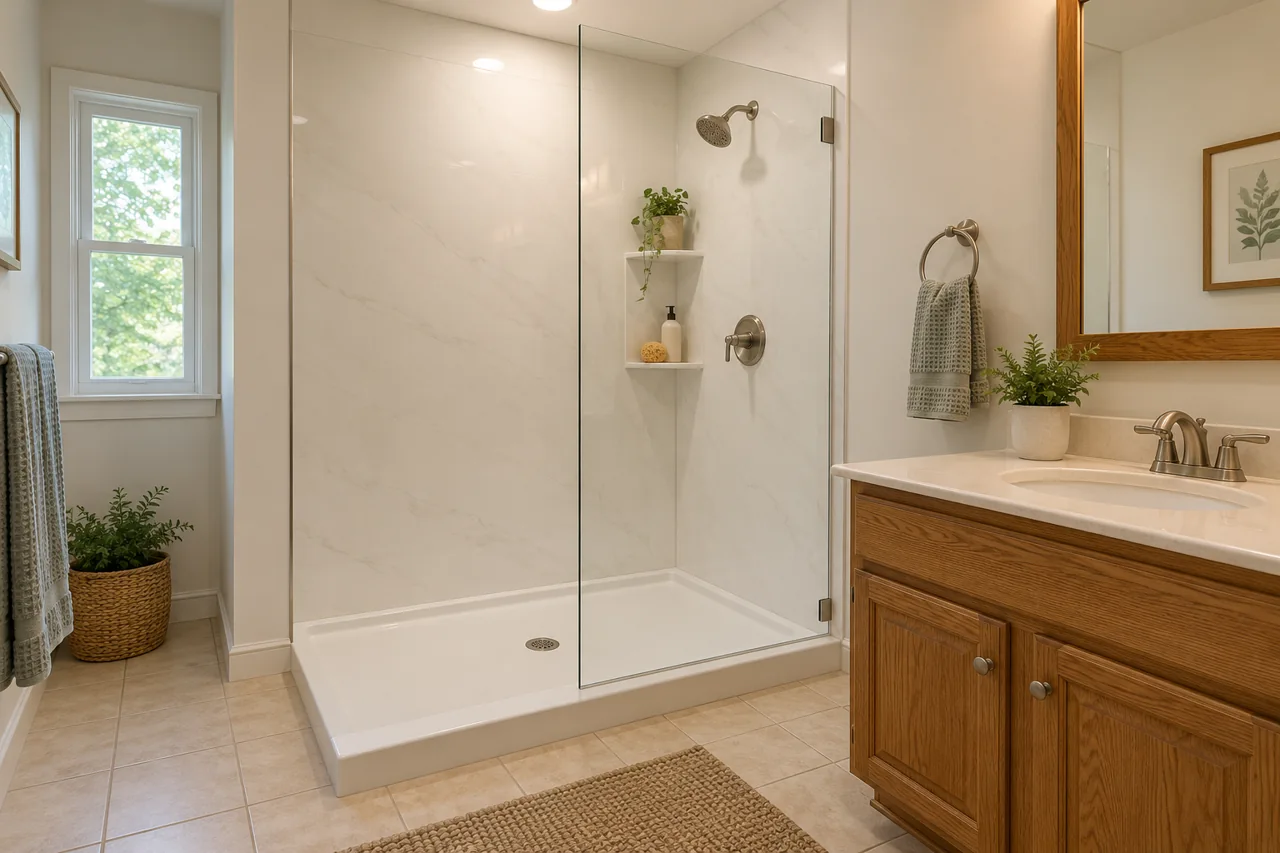
A one-day claim can describe a specific tub, shower or wall-system installation after design, measurement and product preparation. It does not establish a one-day whole-room renovation. Ask what the installation window covers, which steps happen first and when the finished system can be used.
BEFORE YOU HIRE
Get your bathroom remodel moving.
You have done the research. Now choose your project, pick your look, and connect with bathroom contractors for the work you want done.
Start my bathroom projectA fast installation can be valuable when a bathroom is out of service. The useful question is what the installer can finish during that visit—and what must happen before and afterward. A bathing-area system, a tub-to-shower conversion and a full room renovation are different scopes, even when their advertisements use similar language.
Ask which clock the one-day claim measures
Put three dates on your project sheet: agreement and design decisions, installation, and ready for intended use. Add permit closeout where required. Those milestones may be close together, but a headline does not establish that they are the same day.
For example, a custom product can be measured and manufactured before a crew arrives. A one-day installation statement does not tell you how long that earlier work takes. It also does not automatically include replacing the vanity, moving a toilet, painting the ceiling or renovating the floor outside the bathing area.
Before comparing companies, write down your actual goal. “A replacement shower in the current space” is a more useful request than “a whole new bathroom in one day.” If your priority is the entire room, make sure the proposal addresses the entire room.
Compare published claims by their stated scope
The examples below summarize the brands' own public descriptions, checked October 31, 2026. They are not project-specific schedules or a ranking of providers.
| Published example | Scope and timing language | What to confirm for your home |
|---|---|---|
| Bath Fitter PermaFit | The US product description presents a tub or shower and wall system fitted over the existing one, with installation possible in as little as a day. | Whether your existing space suits that system, which products and repairs are included, and the actual installation and use dates |
| Re-Bath process | Its national process page separates design and preparation from installation after materials arrive; it describes installation in “days—not weeks.” | Whether the proposal covers a partial bathing-area project or broader room work, plus exclusions and schedule conditions |
Bath Fitter's process page describes measurement, made-to-measure production and surface preparation before installation. Re-Bath's FAQ identifies room size, material selections, complexity and concealed plumbing or electrical issues as timing factors. These are reasons to obtain a written schedule for your scope rather than treating a headline as a complete calendar.
Draw a boundary around the work being purchased
List the existing items in two groups: being changed and staying as they are. Include the tub or shower, wall system, valve and trim, drain, enclosure, shelves, vanity, toilet, room flooring, lighting, ventilation and paint. Ask the contractor to confirm each group.
A liner fitted over a suitable existing fixture is different from removing the fixture. A replacement bathing assembly is different from moving a drain or changing the room layout. Do not assume that a provider uses the same approach for every home or that all preparation is automatically included.
If you want a tile shower, a different drain position or a curbless entry, describe those requirements directly. Ask what system is proposed, what preparation it needs and whether the advertised timeline applies to that specification. The conversion planning guide helps identify decisions concealed inside a simple product label.
Use a readiness checklist before agreeing to demolition
- Scope: selected products, installation method, retained fixtures and excluded finishes are recorded.
- Fit: measurements and site conditions have been reviewed for the chosen products.
- Materials: the installer confirms which items must be available before starting and how a missing or damaged item affects the schedule.
- Approvals: required permits and any building-management approvals are addressed, with inspection responsibilities identified.
- Access: the crew has a clear plan for the work area, home protection, debris removal and permitted work hours.
- Unknowns: the contract explains how concealed damage or changed conditions will be documented, priced and approved.
- Handoff: the schedule states when the shower or tub can be used and what remains after installation.
This checklist is an original planning tool, not a provider's eligibility test. An unresolved item is a question to answer before the start date, not a reason to invent a standard number of extra days.
Track the dependencies, not just the crew's hours
A practical project sequence is define scope → verify fit → make selections and arrange materials → complete required approvals → prepare the space → install → confirm use instructions and closeout. Some tasks can overlap. Others depend on an earlier decision or inspection. Ask the contractor which dependency controls your installation date.
Write the dependency beside the date. Instead of “starts Monday,” record “starts after the selected base and enclosure are available and required approvals are in place.” Ask what the installer will confirm before demolition, particularly if this is your only bathroom.
Inspection requirements should come from the actual jurisdiction. For one concrete example, Portland's plumbing guidance requires inspection before piping is covered and a final inspection for closeout. A rapid-installation product does not establish an exemption. Use our permit-check method to ask the right local questions.
Separate installed from ready to use
Ask for written use and care instructions for the exact products being installed. For example, Re-Bath's FAQ gives a 24-hour first-use statement in its discussion of DuraBath Acrylic and Natural Stone products. That is a statement about its own system and process, not a waiting period to apply to every shower, adhesive or sealant.
Record the earliest permitted use time and any follow-up visit, adjustment or inspection. If other room work remains, identify which fixtures will be accessible and when. “The crew leaves today” is less useful than a clear answer about which parts of the bathroom you can actually use.
Ask for six answers in the written proposal
- What exact installation scope does the fast timeline cover?
- Which design, manufacturing, delivery and approval steps happen first?
- What is included if opening the area reveals damage?
- Which changes or conditions could alter the installation date or duration?
- When may each affected fixture be used?
- What must be completed before the project is handed over?
Compare these answers beside the total price in the same-scope quote worksheet. A short, well-defined installation may be exactly what you need. A broader renovation may be a better fit when several parts of the room need changing. Choose the written scope and schedule that solve your problem, rather than buying the shortest headline.
Plan the full project timeline and the days without each fixture for the next part of your project.
Read the wall-system scope behind the schedule
If two proposals use different shower finishes, compare the room fit, complete assembly, joints, care and repair responsibilities before treating installation time as the deciding feature. The shower panel versus tile guide puts those questions in one comparison.
Questions homeowners ask
Can a whole bathroom really be remodeled in one day?
A published one-day claim may refer to a specific bathing-area installation rather than the complete room. Confirm the included fixtures, preparation, surrounding finishes and remaining work in the proposal. It is not a universal whole-room schedule.
Does one-day installation include consultation and manufacturing?
Do not assume so. Bath Fitter describes measurement and custom production before installation, while Re-Bath describes installation after materials arrive. Ask for the full project calendar and the installation window separately.
Can I use the shower as soon as the installers leave?
Follow the written instructions for the exact system and installation products. Ask for the earliest use time and any inspection or follow-up requirements; the installation finish time alone does not answer that question.
What should a fast bathroom remodel quote explain?
It should identify the installation scope, preparatory work, materials, approvals, exclusions, changed-condition process, schedule assumptions and use instructions. Compare those details before comparing the advertised number of installation days.
Sources & further reading
Primary sources support the factual points in this guide. Local rules and project requirements can change; use the linked authority for a current decision.
MAKE YOUR NEXT MOVE
Get your bathroom remodel moving.
You have done the research. Now choose your project, pick your look, and connect with bathroom contractors for the work you want done.
Start my bathroom project Already have bids? Compare them here ↗