Start with an itemized scope and the authority responsible for your property. Cosmetic work, fixture replacement and plumbing or layout changes can be classified differently. Check building and trade permits separately, then record applications, inspections and closeout responsibilities in writing.
BEFORE YOU HIRE
Get your bathroom remodel moving.
You have done the research. Now choose your project, pick your look, and connect with bathroom contractors for the work you want done.
Start my bathroom projectA new bathroom cabinet and a new bathroom drain are different projects, even when both appear in the same makeover photo. Before ordering work, describe what will be removed, disconnected, moved and rebuilt. Then ask the authority responsible for your property which building and trade permits apply.
Start with the work, not the label “remodel”
Write a short inventory of the existing room and the proposed changes. Will the sink stay connected? Will a shower valve or drain change? Will someone open a wall, move a doorway, add an outlet or change the exhaust duct? Product names alone do not answer those questions.
Separate cosmetic work from work on the building or its systems. A cabinet-door replacement can leave everything behind it untouched. A vanity replacement may involve disconnecting a sink, changing its mounting and reconnecting plumbing. Ask the contractor to describe that difference before deciding which exemption might apply.
Use the table as a question list, not a nationwide permit ruling. The final classification belongs to the relevant local authority.
A scope-to-permit question table
| Proposed work | Detail to make explicit | Ask the authority about |
|---|---|---|
| Paint, cabinet doors or handles | No plumbing disconnection, wiring change or wall alteration | Cosmetic-work exemption and any property-specific restrictions |
| New vanity or sink | Cabinet-only work versus sink replacement; exact connections retained or changed | Building exemption separately from plumbing requirements |
| Replace a tub or shower | Fixture, valve, drain, surrounding assembly and any framing work | Plumbing permit, building review and required inspections |
| Tub-to-shower conversion | Proposed base, drain arrangement, water supply and enclosure | Requirements for the actual conversion, even if its footprint stays similar |
| New light, outlet or exhaust fan | Existing equipment replacement versus new wiring, circuit or duct work | Electrical and mechanical trade permits |
| Move a wall, door or fixture | Existing and proposed locations; whether framing is affected | Building plans, structural review and affected trade permits |
Read this alongside your bathroom measurement sheet. Showing existing and proposed positions is more useful than asking whether a “small remodel” needs a permit.
Real local examples show why the details matter
Bellevue, Washington: the city's residential permit guidance distinguishes similar fixtures replaced in the same position, including wash basins and toilets, from new or moved fixtures involving modified lines, drains or vents. It separately states that showers and bathtubs require permits. “Nothing is moving” therefore does not settle every bathroom job, even within that one city.
Portland, Oregon: its bathroom research guide lists painting, flooring and cabinet or countertop work without moving plumbing or electrical among work that usually does not require a permit. The same guide identifies walls, openings, structural changes and plumbing, electrical or ventilation changes as reasons one or more permits may be needed. That is Portland's guidance, not an exemption to carry across state lines.
California: the state Contractors State License Board's contract guidance calls for written direction about who will obtain necessary permits. That contract provision does not determine which permits a particular city requires; it makes responsibility explicit once the requirements are established.
Find the right authority for your address
- Confirm the property's jurisdiction. Start with the city or county's official property and permitting resources. Verify which department serves the address rather than choosing the first nearby city's guide.
- Look for both remodeling and trade guidance. Search the authority's site for residential interior alterations and plumbing, electrical and mechanical permits. A building-permit exemption does not answer every trade question.
- Send the same scope to staff and the contractor. Include existing and proposed fixture positions, the type of home and photographs or a simple sketch when requested.
- Ask about additional approvals. Tell staff about known historic restrictions or other property conditions. Ask a condo or building manager separately about any approval process affecting the work.
- Keep the answer with your project records. Save the relevant page, date and written clarification. If two official summaries seem inconsistent, ask the department to classify your exact work instead of selecting the more convenient answer.
You do not need to know the permit's name before contacting the department. You do need to explain the work accurately. Do not describe a new shower connection as cabinet-only work because the visible change looks simple.
Send a scope request that can receive a useful answer
“At this property, we propose to replace the vanity and sink, convert the existing tub area to a shower, and replace the exhaust fan. The drawing marks connections, fixtures and walls that will stay or change. Please identify required building and trade permits, application responsibilities and inspections before any work is covered. Please also tell us what additional information you need.”
Edit every item to fit your project. State uncertainties openly: for example, the proposed shower base or fan duct route is not selected yet. Staff may need that information before making a determination.
For a tub-to-shower conversion, avoid assuming that the old tub footprint means all connections will remain suitable. Ask the selected installer to document the proposed assembly so the authority can review the real scope.
Put permit responsibilities into the proposal
Record who will confirm the requirements, prepare documents, submit applications, pay the stated fees, schedule inspections and provide closeout records. If a permit allowance appears in the price, ask what it includes and how an additional requirement would be handled.
Make a four-column checklist: requirement, responsible party, reference number, completion evidence. Start with requirements confirmed for your property. Do not populate it with guessed permit names.
Compare contractors using the same confirmed requirements. One estimate that includes permit administration and inspections is not directly comparable to another that leaves them to the owner. Our quote comparison worksheet helps keep those exclusions visible.
Plan inspections before work disappears behind finishes
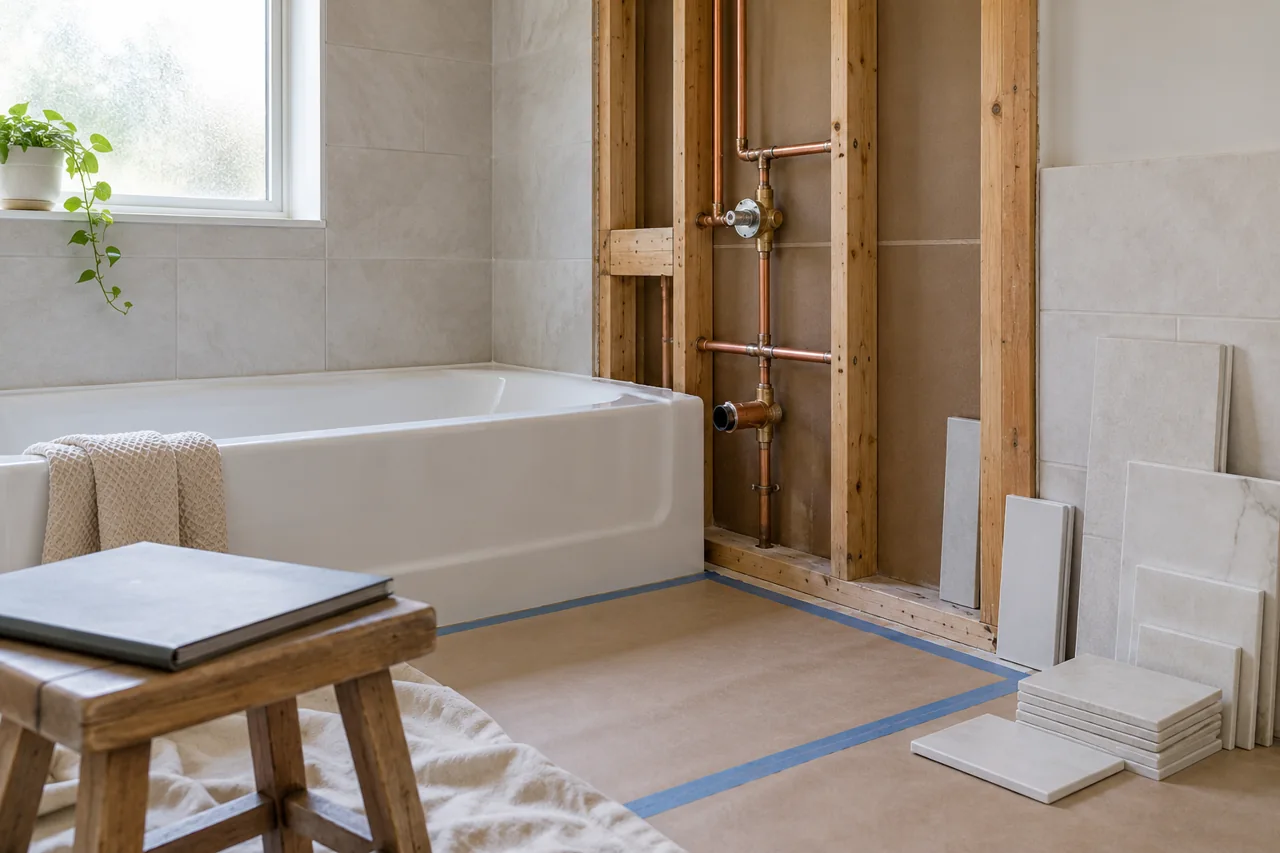
Ask which stages need inspection and who will protect time for them. Portland's plumbing guidance, for example, calls for rough-in inspection before piping is covered and a final inspection to close the permit. Confirm your own authority's sequence; the example is not a national inspection schedule.
If demolition reveals damage or the scope changes, ask whether the approved documents or permits need updating before that work continues. A finished-looking room and an administratively closed permit are different checkpoints. Keep both on your completion list, including when evaluating a one-day installation proposal.
Build a local project file
For a Houston-area property, use the Houston bathroom project-file guide to connect an address-authority check with named trade responsibilities and required inspection records. Its City of Houston and Harris County sources are local examples to verify against your actual property and proposed work.
Questions homeowners ask
Do I need a permit if the bathroom layout stays the same?
The unchanged layout does not settle every trade requirement. Bellevue, Washington, for example, distinguishes some similar same-location fixture replacements from showers and bathtubs, which it says require permits. Ask your authority about the exact fixture and connection work.
Does painting a bathroom require a permit?
Purely cosmetic work may qualify for a local exemption. Portland lists painting among work that usually does not require a permit. Confirm the rules for your property, especially if the job also changes wiring, plumbing, walls or ventilation.
Who should obtain bathroom remodeling permits?
Identify the responsible applicant with the relevant authority and put the agreed responsibilities in the contract. Include applications, fees, inspection scheduling and closeout; do not assume the total price includes those tasks.
Does a one-day installation mean no permit is needed?
No. Installation duration does not determine the local permit classification. Submit the actual scope, proposed fixture connections and any structural or trade changes to the authority responsible for the property.
Sources & further reading
Primary sources support the factual points in this guide. Local rules and project requirements can change; use the linked authority for a current decision.
MAKE YOUR NEXT MOVE
Get your bathroom remodel moving.
You have done the research. Now choose your project, pick your look, and connect with bathroom contractors for the work you want done.
Start my bathroom project Already have bids? Compare them here ↗