Shortlist the exact wallpaper format for the room's ventilation, surface and exposure, then draw the wall area and the objects that interrupt its pattern. Compare representative motif placements before confirming preparation, adhesive, care and roll quantity with the supplier or installer. A bathroom collection or a washable label does not settle those decisions.
Choose bathroom wallpaper in this order: the exact material and its room limits, the wall area you want to cover, then the pattern that remains visible around the fixtures. A beautiful design can come in several formats with different instructions. A bathroom collection is a shopping starting point, not permission to put every version beside a shower.
Use the two original room concepts below to compare a full-height powder-room feature with a dry upper-wall treatment in a room that also has a shower. Then take a wall elevation and an exact material choice into the order. These are design proposals, not tested installations or a ranking of wallpaper brands.
Shortlist the exact format before the pattern
Hygge & West's current FAQ says its traditional and pre-pasted papers can be used in bathrooms with adequate ventilation and away from direct water contact. It expressly excludes its peel-and-stick papers from bathrooms. Keep that distinction even when two versions have the same design name.
A named candidate is Daydream / Traditional: a 27-inch-wide, 30-foot roll with a 36-inch vertical repeat and straight-across match. Its peel-and-stick option remains subject to the brand's bathroom restriction. Preserve the format when requesting a sample or quote.
A second candidate is Mitchell Black Chiseled–Emerald, Premium Paper, SKU WC398-3-PM-10. That page distinguishes Premium Paper from Peel & Stick and lists the premium material as spongeable. Request the sample and instructions for the actual substrate you intend to buy. Do not borrow a cleaning or installation claim from another column of a multi-material product table.
| Candidate | Keep attached to the sample | Resolve before buying |
|---|---|---|
| Daydream / Traditional | The Traditional installation guide and the brand's bathroom conditions. | Whether the proposed wall avoids direct water and how the repeat will meet the room's interruptions. |
| Chiseled–Emerald / Premium Paper | The Premium Unpasted guide and the selected substrate identity. | Whether the actual wall, exposure and preparation suit that specified material. |
These examples do not establish a universal winner. A different material can change the answer. Mitchell Black's FAQ excludes its natural grasscloth from bathrooms or areas where humidity or moisture may occur. A similar-looking printed or faux-grasscloth surface should therefore not be mistaken for the natural-fiber product.
Choose the wall boundary as part of the design
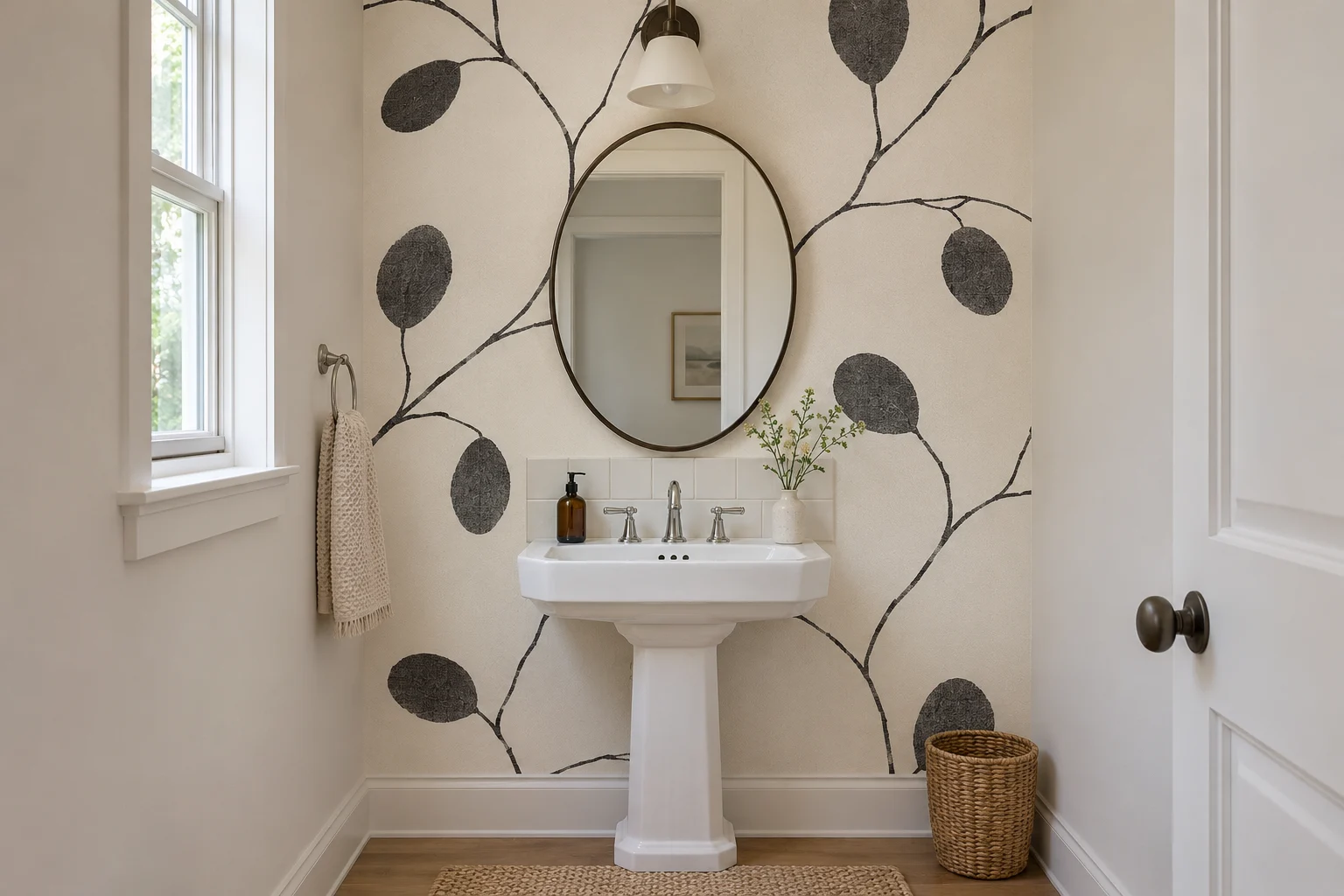
In a powder room, a full-height feature can make the mirror wall the main composition. The opening concept uses an original, widely spaced abstract motif. Some of the pattern disappears behind the mirror, while larger visible pieces frame it. That interruption is part of the idea, rather than an accident to discover after hanging.
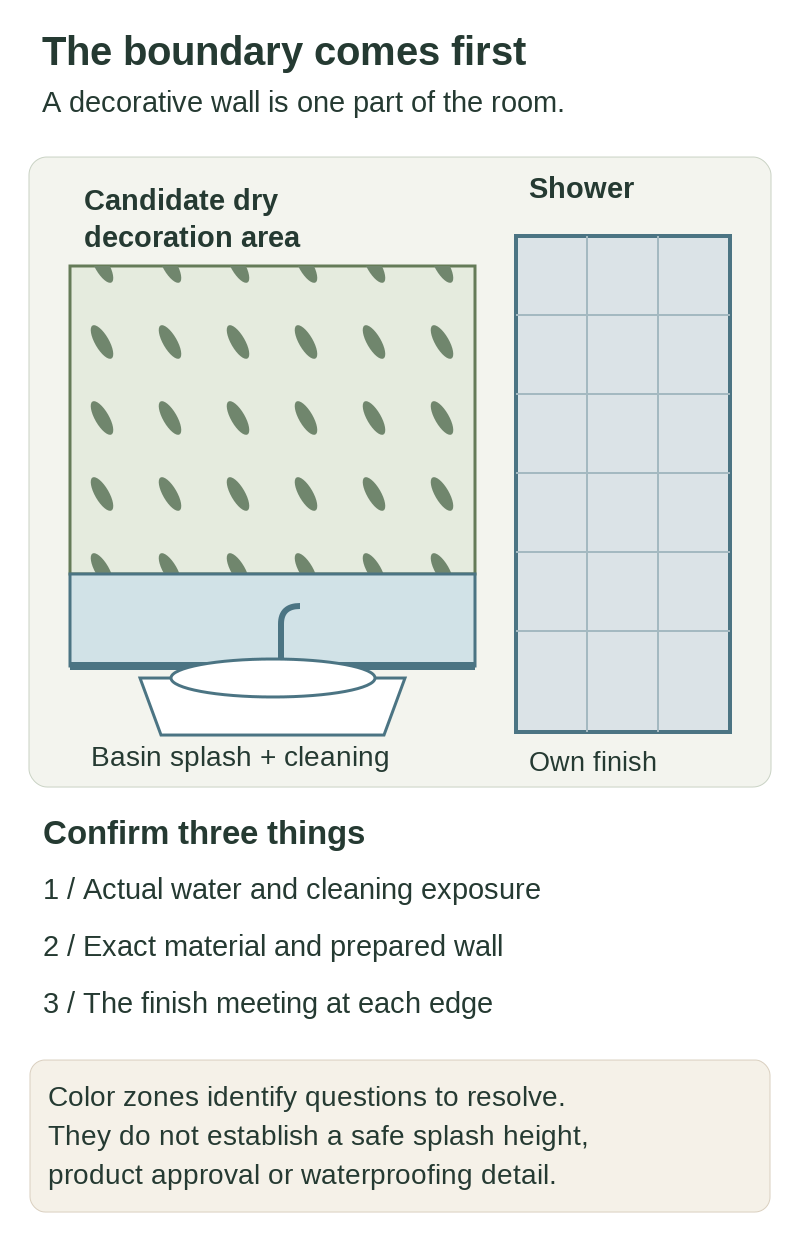
Check the basin and countertop relationship even when there is no shower. Decide what finish handles the places that get splashed or wiped repeatedly, then draw the wallpaper's exact stopping line. A small backsplash in a picture does not prove that the same boundary fits your household's use.
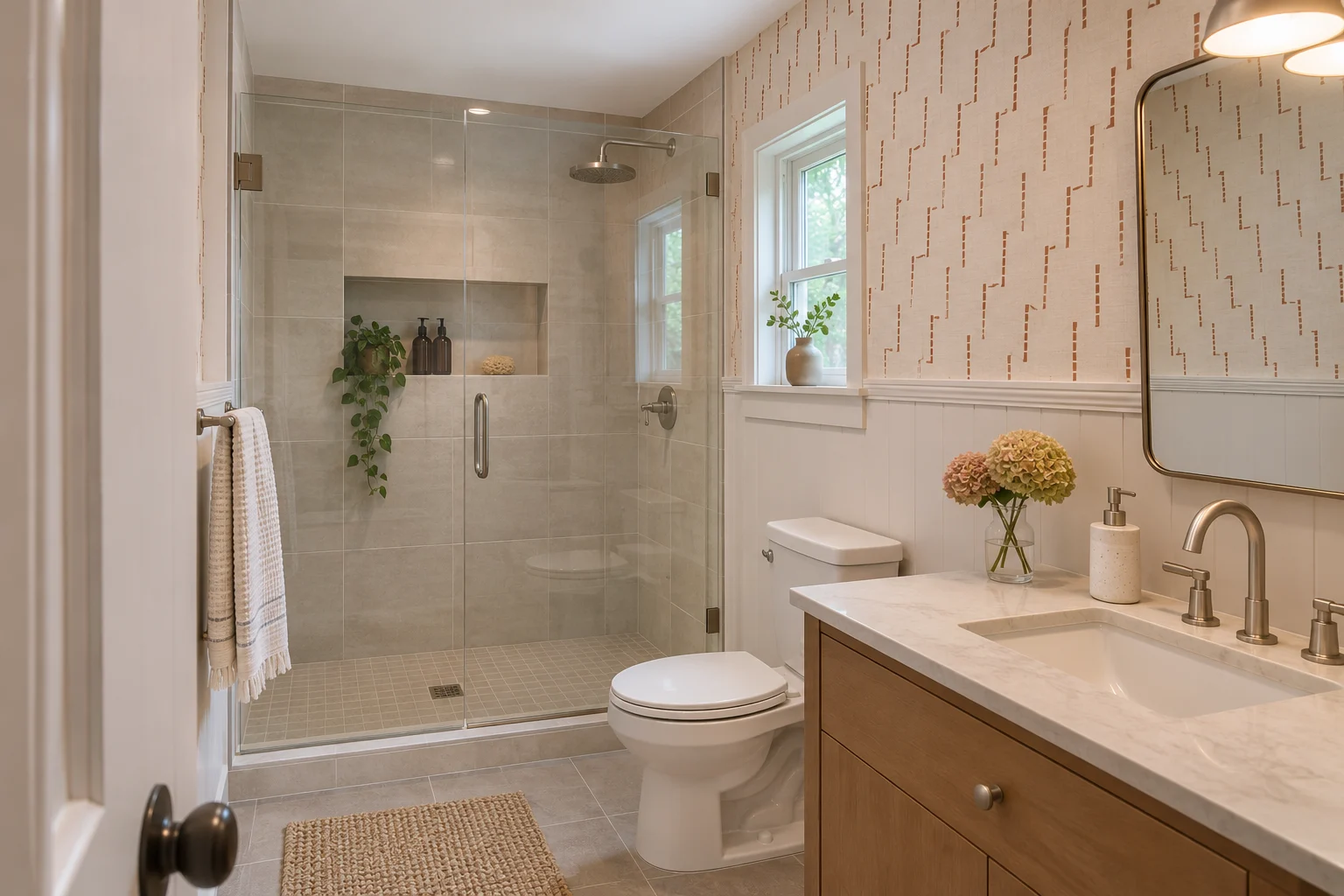
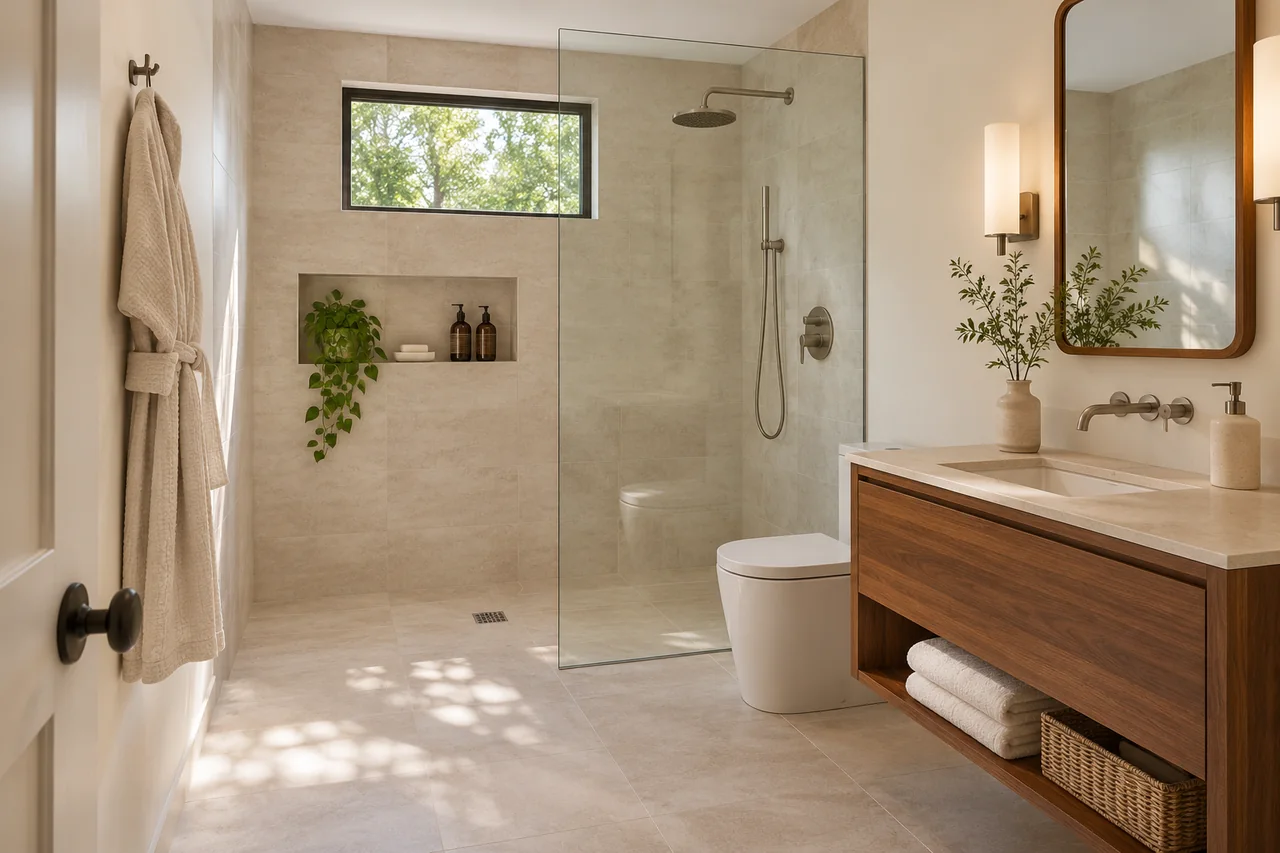
In a room with a shower, a limited upper-wall treatment offers a different composition. Here the pattern is a repeated rhythm across a narrower band. The lower finish and shower enclosure remain visually distinct. Compare where the band ends at a window or door and whether a short leftover strip would look intentional.
Neither approach supplies a waterproofing detail. Use the wet-room planning guide to identify the activities and areas expected to get wet. Keep the wallpaper boundary on that same room sketch, then have the selected material and actual exposure confirmed.
Mock up what remains visible
Daydream's sample information says a sample may not contain a full repeat or complete motif. Ask for a representative layout view before judging how its larger shapes will appear around your fixtures.
Make a simple elevation of the wall you intend to paper. Draw the outside edges of the mirror, lights, medicine cabinet, door casing and any other object that hides or interrupts the pattern. Include the wallpaper's upper and lower stopping lines. The useful picture is the wall as it will be occupied, not an empty rectangle.
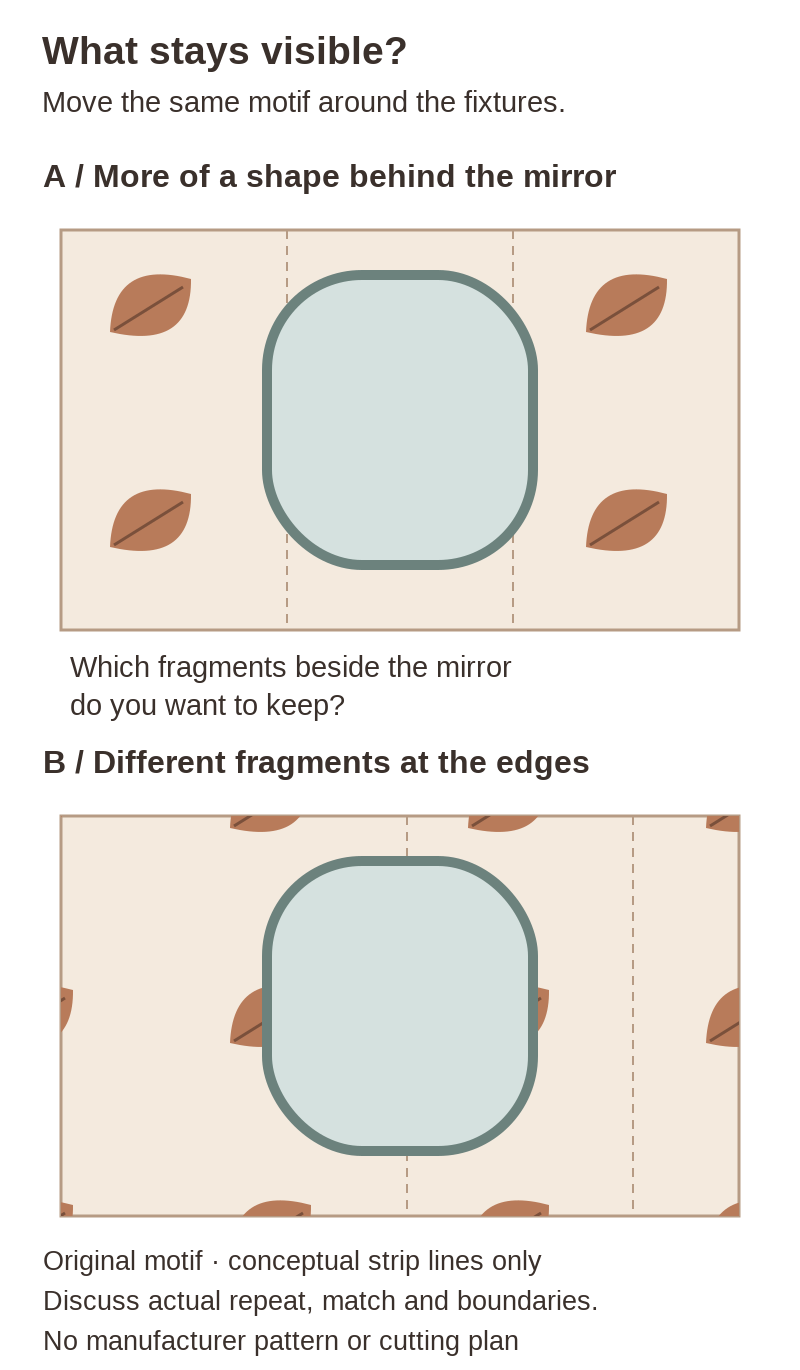
Compare two placements of a representative motif on that elevation. In one, a large shape may sit behind the mirror; in another, a recognizable fragment may remain beside it. Decide which view you prefer from the doorway and which crop at the top or bottom bothers you. Ask the installer how the selected repeat, match and wall shape affect that preference.
For a small geometric design, look at the repeated lines around the mirror and casing. Do you want a narrow partial row along the border? Would a different starting position create a more comfortable fragment? A tight repeat is not automatically right for a small room, and a large motif is not automatically wrong. The interruptions are often the more useful comparison.
Confirm the wall, adhesive and care together
Keep the current installation document with the material selection. Hygge & West's linked Traditional guide, marked 12/25, calls for a clean, dry, smooth wall and recommends wallpaper primer, with preparation depending on the existing surface. Mitchell Black's Premium Unpasted guide likewise specifies preparation and priming and cautions against high humidity during curing. Have the installer identify the actual wall condition, primer, adhesive and timing for the chosen system.
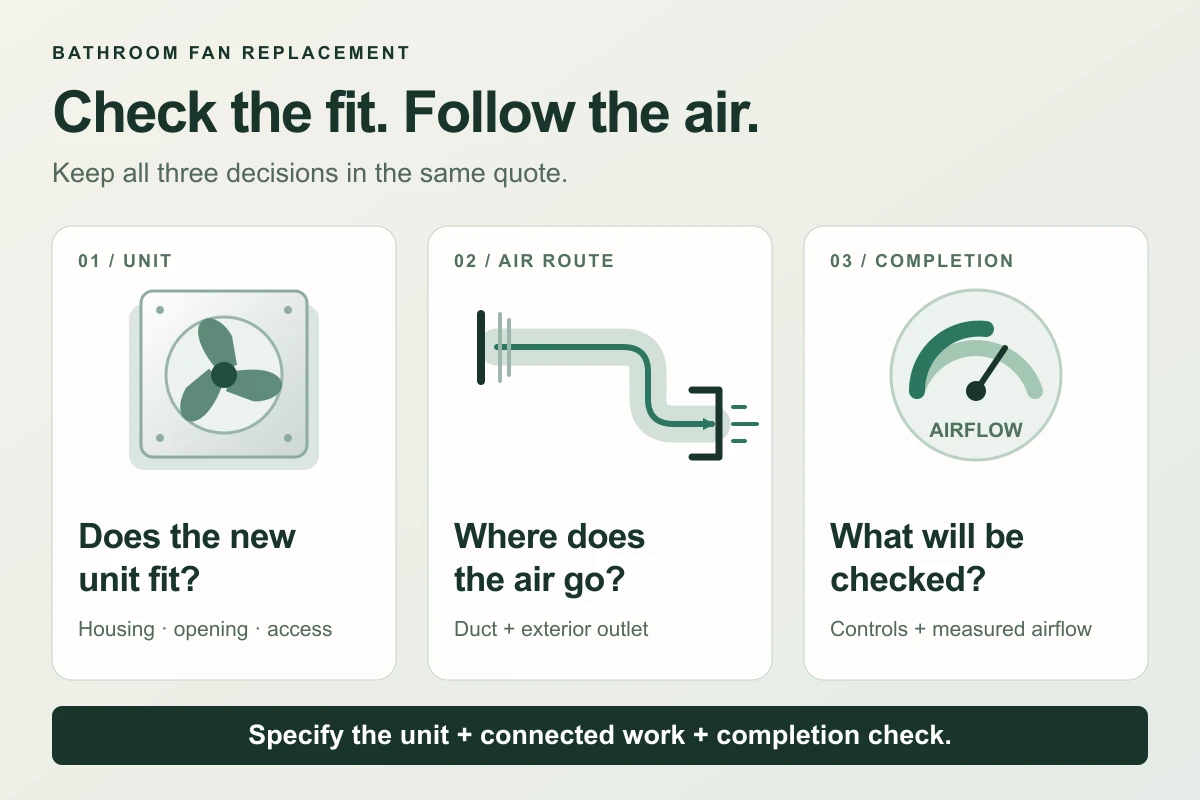
Do not ask the new paper to disguise an unresolved damp or failing surface. If repair is needed, describe that work separately and keep the decorative order provisional until the condition has been assessed. Wallpaper selection does not determine whether the bathroom's ventilation needs work; use the fan replacement checks for that separate decision.
Daydream's product page specifies mild soap without detergent; the linked Traditional guide says mild detergent. Both reject abrasives. Ask Hygge & West which instruction applies to the supplied material and keep the answer with its care record.
For either candidate, ask what ordinary cleaning means for that exact surface and what to do about a mark that does not lift. A cleanability label is not proof that every bathroom spray is suitable. Keep that answer with the material name rather than with a generic note saying “washable wallpaper.”
Approve the wall plan before the rolls
Give the supplier and installer one marked wall elevation and a short specification: exact pattern/color/material; walls and stopping lines; wall preparation and named products; repeat/match and preferred visible motif; quantity and run/lot plan; and the clarified care instruction. Leave unresolved items assigned to the person who will answer them.
Ask for the purchase quantity using the actual wall heights, roll format and pattern layout. Removing the area of a mirror from a square-foot total does not by itself explain how strips will be cut or matched around it. Have the installer establish the needed quantity rather than converting a decorative mockup into a roll calculator.
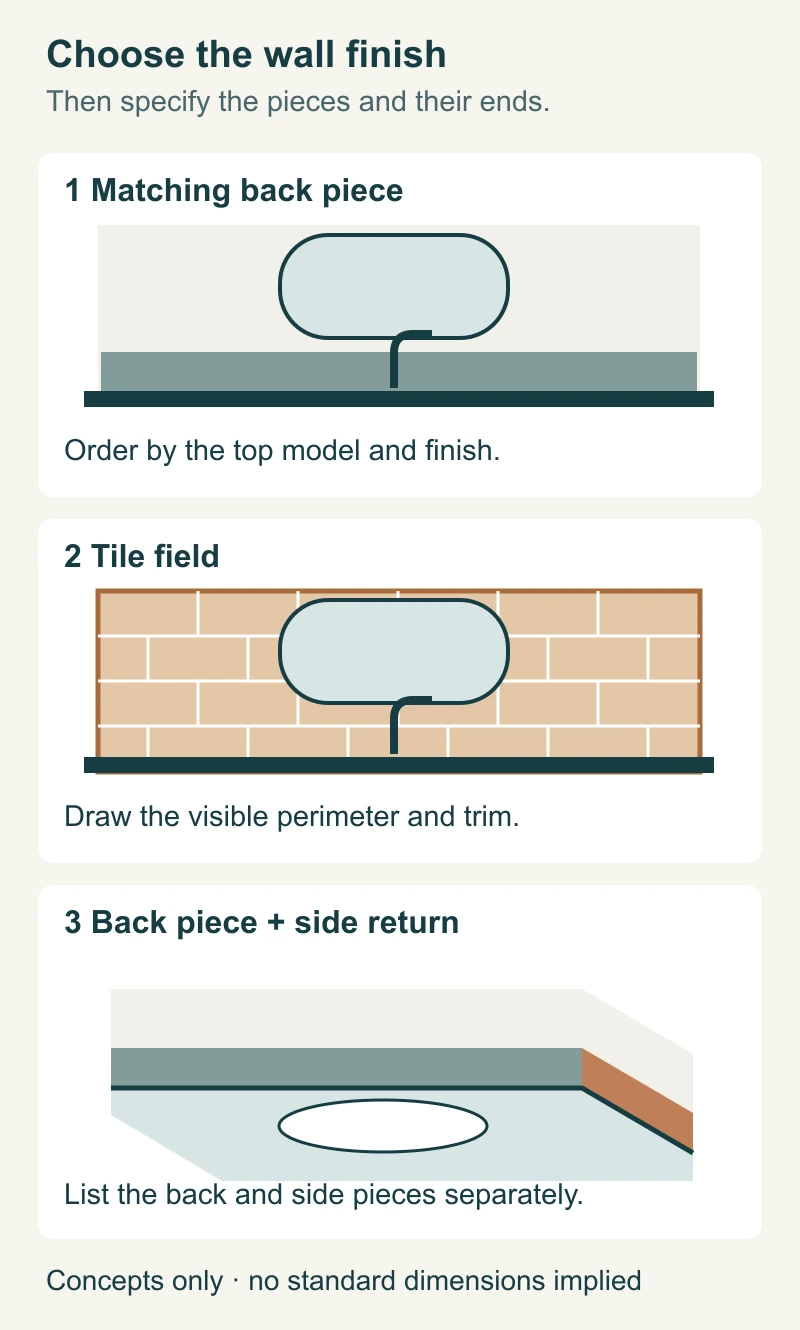
If painted surfaces meet the paper, use the retained-finish color guide for those adjacent colors after the wallpaper candidate is known. If the vanity back or side pieces are changing, coordinate the backsplash pieces and exposed ends before approving the wallpaper boundary. The final choice should describe a particular material on a particular wall, with the pattern breaks you actually want to see.
Questions homeowners ask
Can I use peel-and-stick wallpaper in a bathroom?
Check the exact brand and product. Hygge & West expressly excludes its peel-and-stick papers from bathrooms even though it permits its traditional and pre-pasted formats under stated conditions. A different product needs its own application guidance.
Does washable wallpaper belong inside the shower?
A cleanability description does not establish direct-water suitability. Confirm the actual exposure and selected product. This guide's concepts keep decorative wallpaper separate from the shower's specified finish and assembly.
Is a small pattern always better in a small bathroom?
Compare the visible fragments around the mirror, lights and casing instead of choosing by room size alone. A large motif can work as a feature, while a small repeat can still leave an awkward narrow strip at a boundary.
Can I estimate rolls by subtracting the mirror area?
That subtraction does not explain the strip layout or pattern matching. Give the supplier or installer the actual wall elevation, roll format and desired motif position so the purchase quantity reflects the selected product.
Sources & further reading
Primary sources support the factual points in this guide. Local rules and project requirements can change; use the linked authority for a current decision.
- Hygge & West: Wallpaper FAQ and bathroom-format limits
- Hygge & West: Daydream product, repeat, sample and care information
- Hygge & West: Traditional installation guide, marked 12/25, currently linked
- Mitchell Black: Chiseled–Emerald, Premium Paper WC398-3-PM-10
- Mitchell Black: Premium Unpasted Preparation and Installation Guide
- Mitchell Black: FAQ, including natural-grasscloth limits
MAKE YOUR NEXT MOVE
Get your bathroom remodel moving.
You have done the research. Now choose your project, pick your look, and connect with bathroom contractors for the work you want done.
Start my bathroom project Already have bids? Compare them here ↗