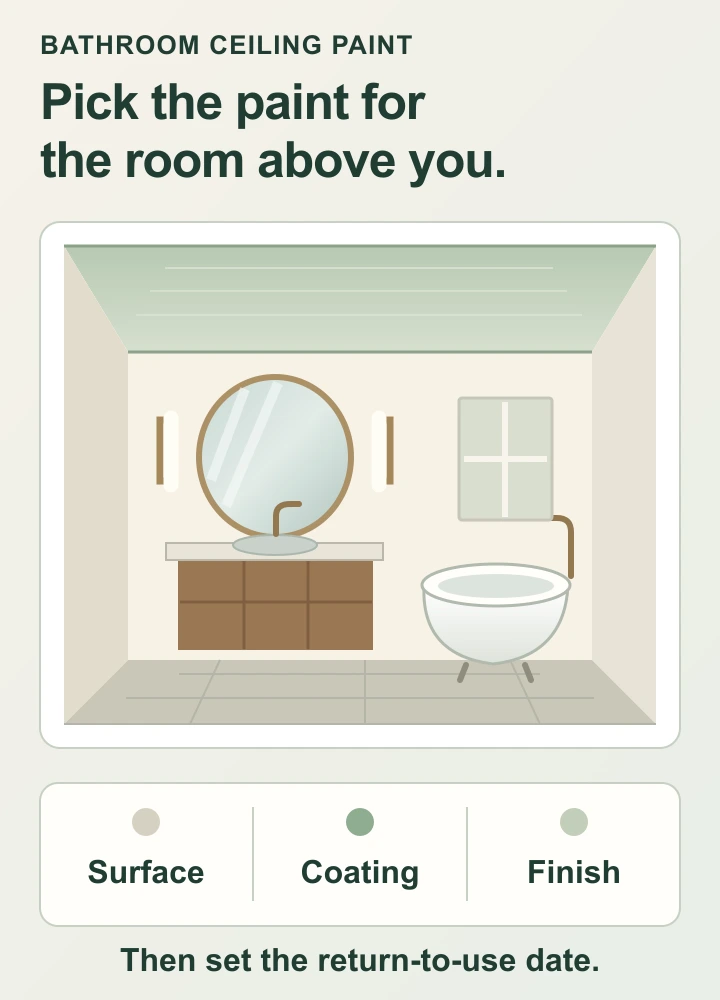
Choose a coating documented for the ceiling material and its moisture exposure, then select a finish within that product line. A bath-specified matte finish can be an option; semi-gloss is not a universal requirement. Address unresolved water problems first, and distinguish the chosen paint’s recoat time from its return-to-service and washing directions.
Choose bathroom ceiling paint by the room's conditions and the exact coating—not a rule that every bathroom needs the same sheen. A formula made for humid rooms may offer a finish you like without forcing the whole ceiling into a glossy look. The useful choice connects the ceiling you have, the product you buy and the way you will use the bathroom after painting.
Start with a short ceiling record: what surface is there, why it needs painting, whether it gets direct water exposure and when the household needs the shower again. That record makes the paint counter and contractor conversation much easier.
Separate a color change from a ceiling problem
A sound ceiling that you want in another color is a different starting point from one with a spreading stain, recurrent peeling, dampness or damaged material. Photograph the condition before covering it and identify what needs assessment or repair. Keep the finish choice open until unresolved water problems have been addressed.
The EPA's moisture guidance explains that moisture control is central to preventing recurring mold problems and that moldy surfaces should not simply be painted over. If that is the issue, establish the appropriate assessment and repair first.
If shower moisture is part of the problem, include ventilation in the project. The bathroom fan replacement guide helps you discuss the existing fan, duct route and controls without treating a new coat of paint as the ventilation fix.
Choose the formula before the sheen
The word “matte” does not describe the whole paint. Benjamin Moore lists AURA Bath & Spa Matte 532 for humid bathroom environments, including bathroom-ceiling projects. That is a specific bath-oriented matte product, rather than evidence that any leftover flat wall paint is suitable for the job.
Another example, Zinsser PERMA-WHITE Interior, is offered in eggshell, satin and semi-gloss. Its manufacturer describes protection against mold and mildew on the paint film. That coating claim does not establish that a hidden moisture problem has been corrected.
Use those examples to change the shopping question from “Which sheen is always best?” to “Which documented ceiling coating suits this room, and which of its finishes do I want?” Compare the exact product line, intended surfaces, exposure limits and care directions. A finish name shared by two cans is not proof of equivalent performance.
Describe where the paint will go
Tell the supplier whether this is the main bathroom ceiling, a surface inside a shower enclosure or the ceiling of a steam room. Mention any direct spray or prolonged wetting. The room label “bathroom” leaves those differences unanswered.
The PERMA-WHITE PWH-02 technical sheet, for example, excludes immersion or prolonged water contact and names shower enclosures, saunas and steam rooms among its limitations. Do not transfer a product's humid-room description to an exposure its instructions exclude. Obtain a suitable finish system for that exact location.
For a larger remodel, settle the ceiling and bathing-area boundaries together. A wet-room layout makes this conversation especially important: what will actually get wet, and what is intended to remain a normal painted surface?
Put primer and topcoat on the same specification
Write down what is being painted: existing coating, repaired drywall, plaster or another material. Ask the painter to identify the preparation and primer for that condition. An advertised paint-and-primer combination does not settle every stain or adhesion question.
Benjamin Moore's Matte 532 technical sheet distinguishes properly prepared surfaces from conditions requiring a special-purpose primer. For a water-stained but otherwise undamaged ceiling, Sherwin-Williams' product-selection guidance likewise puts correction of the staining cause before an appropriate stain-blocking primer. Specify the relevant product instead of adding an unexplained extra finish coat.
Keep material repair, preparation, primer and finish application as separate entries in the work description. That makes a ceiling repaint easier to price and avoids assuming that the person applying the topcoat is also repairing the cause of an old mark. Have the painter establish safe preparation before disturbing old coatings.
Judge the finish in the room
Bring a physical sample into the bathroom with the wall color, tile and trim you are keeping. Look at it during the day and under the lights normally used at night. Consider the ceiling as part of that group instead of choosing an isolated white swatch from a screen.
Record the complete selection: manufacturer, product line, sheen and color identifier. A note saying “white bathroom paint” can leave several important choices open. If someone proposes a substitute, compare its documentation and sample before treating it as the same selection.
Read three different drying milestones
A recoat interval answers when another coat may be applied. It does not automatically answer when the shower can run or when the ceiling can be washed. Put those events on separate lines before agreeing a start date.
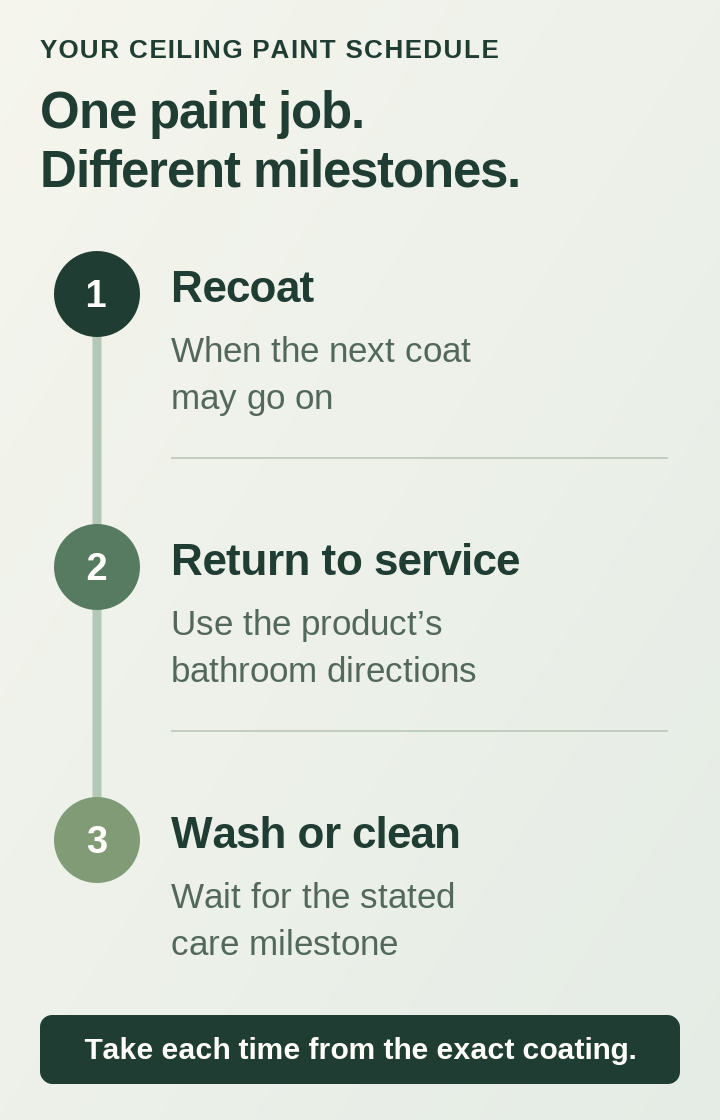
These published manufacturer examples show why the distinction matters:
| Exact coating | Early paint milestone | Later use and care |
|---|---|---|
| AURA Bath & Spa Matte 532 | At 77°F and 50% relative humidity, its sheet lists 1 hour to touch and to recoat. | At least 24 hours before full service for best results; washing after two weeks. Cool or humid conditions lengthen the stated times. |
| PERMA-WHITE Interior | Its technical sheet lists 30 minutes to touch and 2 hours to recoat at 70°F and 50% relative humidity. | Its product page says to wait 24 hours before shower use when applied nearby, and not to scrub for seven days. |
The first row follows the Matte 532 sheet; the second combines the PWH-02 sheet with the manufacturer's shower-use directions. Check the current label and sheet for the actual can, region and conditions. Ask the painter to put the agreed return-to-use date into the work schedule, with a plan for conditions that extend it.
Count coat-area when planning the quantity
For an original arithmetic example, a flat rectangular ceiling measuring 8 by 10 feet has 80 square feet of surface. If the specified system calls for two finish coats, that represents 160 square feet of coating coverage before allowances. The room has not become larger; the same surface is being coated twice.
Use the selected product's spread rate, actual ceiling shape and condition to establish the purchase quantity. Include primer separately where specified. Record the planned coats instead of treating one container size or one-coat marketing language as the work specification.
Keep a ceiling order card with the project
Before the order is placed, put the following entries together. Leave a field visibly unresolved if a decision still belongs to the painter, supplier or repair contractor.
| Entry | What to write down |
|---|---|
| Ceiling condition | Existing material and coating; repair or moisture issue resolved or still awaiting assessment |
| Exposure | Main room, enclosure or other location; expected humidity and direct water contact |
| Coating identity | Exact manufacturer, line, sheen, color and current technical sheet |
| Prepared surface | Named preparation, repairs and primer; person responsible for each |
| Paint quantity | Ceiling area, specified coats and product-based allowance |
| Household schedule | Recoat event, return-to-service date, earliest cleaning date and operating conditions |
Use that card beside the bathroom remodel timeline. You can then choose a finish you like, know what the painter is supplying and plan when the bathroom returns to normal use. If the ceiling is one item in a broader refresh, keep it in the same written project brief so the related work is priced together.
Still deciding what the ceiling should look like? Compare three distinct ceiling design approaches before choosing the coating. The color boundary, retained height and any service access belong on the same room sketch.
If the wall color is changing too, compare bathroom paint colors around the finishes you are keeping. Three original room concepts and a sample record help you judge the wall beside retained tile, the vanity and the light you actually use.
Questions homeowners ask
Should bathroom ceiling paint be matte or semi-gloss?
Choose from products documented for the actual ceiling and moisture exposure. AURA Bath & Spa is one manufacturer example of a bathroom-oriented matte coating. That does not make all flat or matte paints interchangeable, or establish one sheen as right for every room.
Can bathroom ceiling paint go inside a shower or steam enclosure?
Check the exact coating’s exposure limits. A product described for humid bathrooms may still exclude prolonged water contact, shower enclosures or steam rooms. Get a suitable system for the actual location before ordering.
Does paint-and-primer mean a stained ceiling needs no separate primer?
No. Resolve the staining source and establish the surface condition, then use the selected manufacturer’s preparation and stain-blocking recommendations. A finish coat does not repair a moisture source.
Can I shower as soon as the ceiling is ready for another coat?
Use the product’s return-to-service or shower-use instruction rather than its recoat interval. Also record the later cleaning or washing direction; those events can have different waiting periods.
Sources & further reading
Primary sources support the factual points in this guide. Local rules and project requirements can change; use the linked authority for a current decision.
- Benjamin Moore: AURA Bath & Spa Matte 532 product information
- Benjamin Moore: AURA Bath & Spa Matte 532 US technical sheet, 040925
- Rust-Oleum: PERMA-WHITE Interior product and shower-use directions
- Rust-Oleum: PERMA-WHITE PWH-02 technical data, revision 120922
- Sherwin-Williams: Interior product-selection FAQs, stained ceilings
- US EPA: A Brief Guide to Mold, Moisture and Your Home
MAKE YOUR NEXT MOVE
Get your bathroom remodel moving.
You have done the research. Now choose your project, pick your look, and connect with bathroom contractors for the work you want done.
Start my bathroom project Already have bids? Compare them here ↗