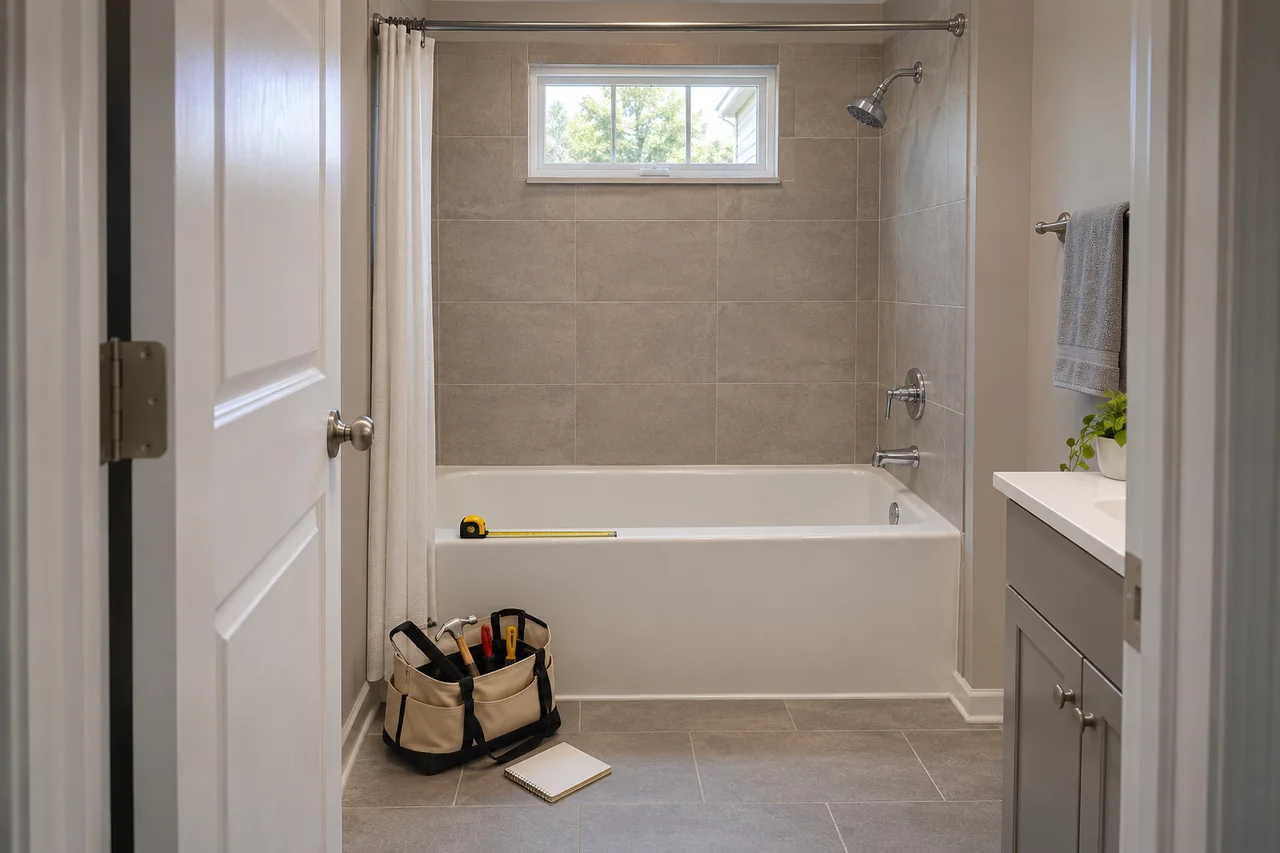
Measure the closed coverage route, then identify the width and quantity of each panel. With the actual rings or header, locate the fabric top and subtract the confirmed finished length to find the hem position. Check any trim and size the liner independently for its own connection and intended position in the tub or shower.
Choose shower curtain sizes as a width and length for each panel, plus a separate size for any liner. Measure where the closed curtain needs to reach, then work from the actual fabric top to the intended hem position with the selected rings or header. A familiar size label cannot settle both measurements.
If an existing curtain leaves an end exposed, hangs lower than you want or closes awkwardly in the middle, write down that problem before replacing it. Ordering the same numbers in a different pattern may preserve the problem. The useful starting point is the hanging arrangement you want to keep or change.
Mark the line that needs to close
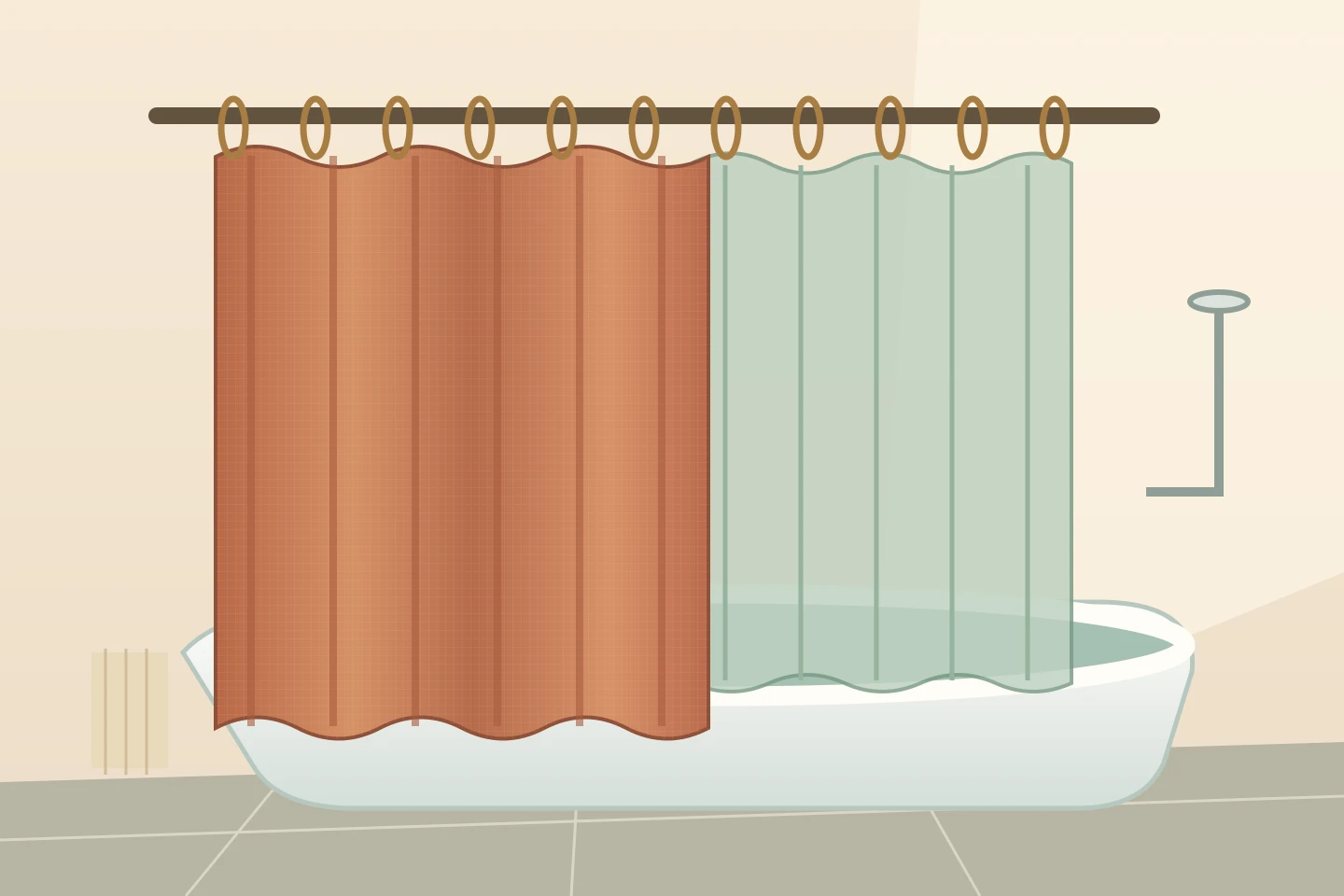
On a quick sketch, mark the left and right positions where the curtain should finish when closed. Show one panel drawing across, or two panels meeting in the middle. Add the rod's shape: a straight span, a curve or a route around more than one side of the bath.
Record the distance relevant to that closed line. For a straight wall-to-wall arrangement, the finished wall measurements are a useful starting record. For a curved or wraparound arrangement, follow the supplier's measuring instructions for that rod and curtain route; a straight distance between the walls does not describe every hanging path. Do not use the tub's catalog length as a substitute.
Now distinguish flat panel width from the line it covers when hanging. Fabric used in folds or a centre closure cannot also be counted as a second strip of coverage. Decide how you want the curtain to look when closed, then use the selected maker's width guidance for that arrangement. There is no width multiplier supplied by this guide.
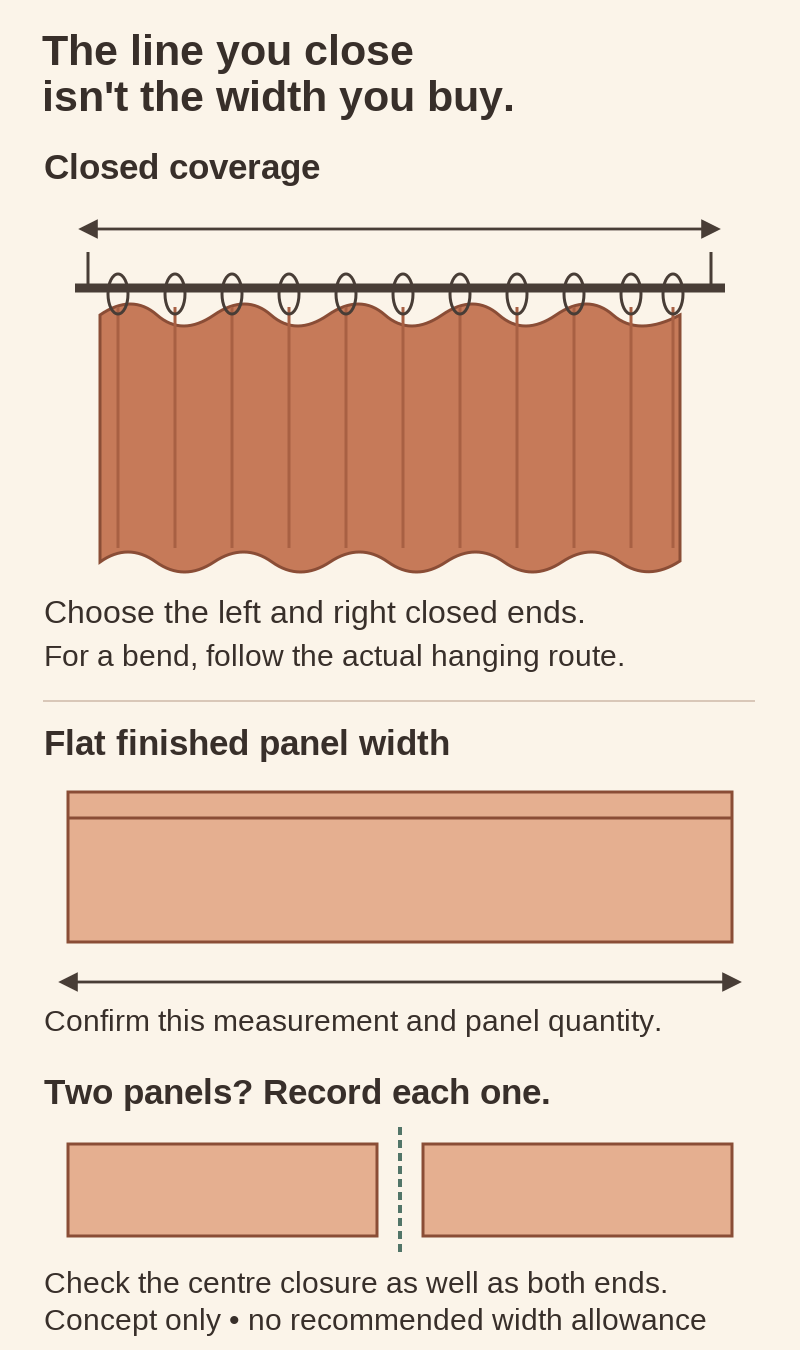
Pepper Home's measuring guide, dated July 2023 and still available when checked, uses wall-to-wall width with its own added allowance, then rod-to-floor length with its own deduction for the hanging arrangement. That is guidance for its panels. Keep the selected manufacturer's method with the order rather than transfer an allowance to every curtain, liner or curved rod.
Read the curtain and liner as two separate orders
These current examples show why one “standard size” field is not enough. They are independent product examples, not a recommended or manufacturer-approved pairing.
| Product example | What the official page lists | What to confirm for your order |
|---|---|---|
| Pepper Home Beatrice Shower Curtain, Amalfi | 72- or 84-inch width choices; its size examples include 72 W × 72 L and 72 W × 84 L. Panels are sold individually. | Each panel's quantity, selected length, lining, trim and hanging requirements. |
| IKEA NÄLK clear liner, 006.264.98 | Width 71 inches and length 71 inches on the US product page. | The liner's own closed coverage, header connection and bottom position in the actual tub or shower. |
The Beatrice product page requires a separate plastic shower liner, including when a fabric lining is selected. A decorative panel's lining is therefore not the same item as its shower liner. The page also says bottom pom-pom or tassel trim adds one inch to length. Confirm whether the length you are ordering includes the chosen trim before calculating where the bottom lands.
IKEA describes NÄLK as a liner hung inside the decorative curtain. Its 71-inch measurements describe that product, not a required deduction from every outer curtain. Choose each layer for its own job and verify their hanging arrangement together. These dimensions alone do not establish that two products will work as a set.
Keep the current product identification with any general size guide. Check the selected header's attachment count, ring or hook requirements and rod suitability before buying hardware. If product instructions and an older guide disagree, ask the maker to confirm the current configuration instead of combining whichever figures are convenient.
Find the fabric top before calculating the hem
The length of the cloth does not necessarily begin at the rod. Rings, hooks, buttonholes and built-in headers position the fabric differently. With the chosen hardware, locate the actual top edge of the panel. Measure its height above one dry-floor reference, then subtract the confirmed top-to-hem length to see where the hem would land.
For a header that hangs below a chosen rod mark, you can keep the measurement chain explicit: hem above floor = rod-mark height − drop to fabric top − fabric top-to-hem length. The drop must describe the selected hardware and header together. If the fabric top extends above the rod mark, use its actual height directly; do not force that arrangement into an assumed downward drop.
Here is hypothetical arithmetic, not a mounting height or clearance recommendation: a rod reference is 85 inches above the dry floor, the actual fabric top hangs 2 inches below that mark, and the confirmed top-to-hem length is 80 inches. The hem would be 85 − 2 − 80 = 3 inches above that floor. Changing the header drop changes the result even if the fabric label stays the same.
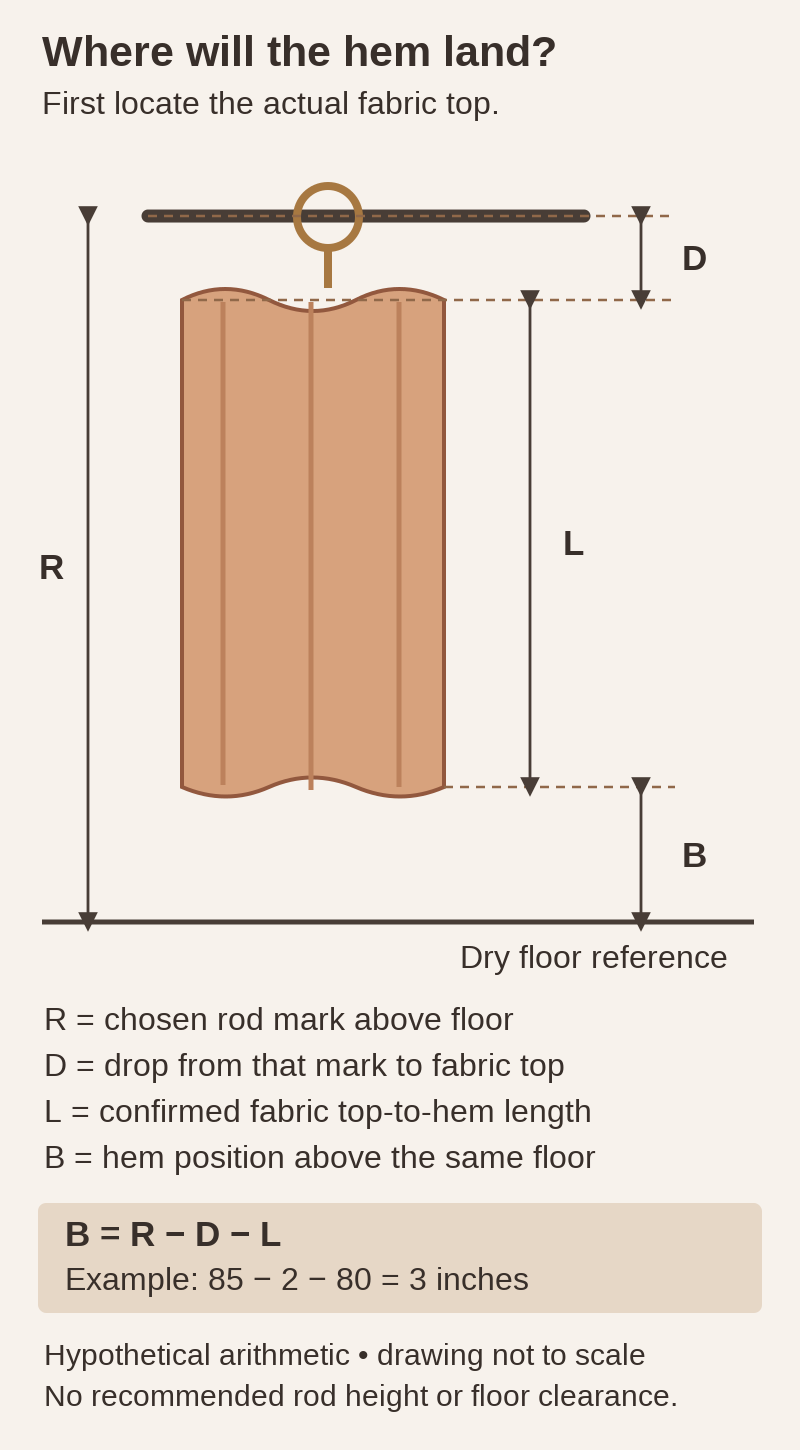
For an unopened product or a custom order, confirm where the maker measures its listed length and what the finish includes. Do not silently treat a buttonhole-to-hem measurement, a fabric top-to-hem measurement and a trimmed overall length as identical. On a curtain you already own, take the measurement directly and note its endpoints.
Give each layer its own bottom position
Draw the tub rim or shower threshold on the same sketch as the curtain. Locate the intended outer-panel hem and the intended liner bottom separately, using the selected products' guidance and the actual bathing arrangement. A dry-floor calculation for the decorative panel does not decide how its liner belongs inside a tub.
For a shower without a tub rim, have the project team resolve the hanging location and water-containment arrangement for that shower. Our shower pan fit guide addresses the base's boundaries and entrance; choosing a longer textile is a separate decision. Do not infer a suitable wet-area arrangement from a curtain photograph.
Make a dry check of movement as well as the closed view. Where does the curtain gather when open? Can you reach the intended entrance and controls? Will a seat or nearby fitting occupy the same place as a moving layer? Use the shower seat footprint check if seating is part of the plan. Resolve the actual product instructions before changing the rod or its support.
For two decorative panels, check the centre meeting and both ends rather than assume their listed widths automatically describe the finished closure. If the liner uses a different split or hanging connection, draw that separately too.
Write an order that identifies every layer
Use the rows below as a measuring and ordering aid. Fill in the actual dimensions or leave a clear question for the supplier; do not replace a missing measurement with the word “standard.”
| Order line | Record before checkout |
|---|---|
| Outer panel or panels | Maker and exact product/configuration; quantity; width of each panel; selected length and its measurement endpoints. |
| Hanging arrangement | Rod shape and closed end positions; selected header and hardware; actual fabric-top location; confirmed attachment count. |
| Liner | Exact product; quantity; its own width and length; hanging connection and intended bottom location. |
| Finish and use check | Lining versus liner, any trim added to length, centre/end closure and gathered position when open. |
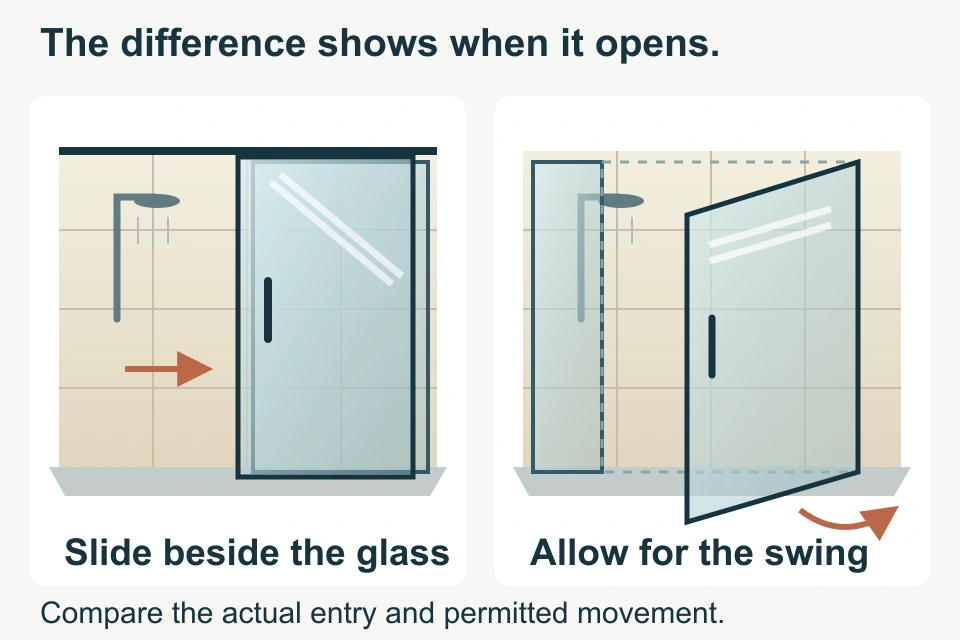
Keep a photograph of the current setup beside the sketch, with the problem you want the new curtain to solve. If you are deciding between textiles and glass, compare the movement and clear entry of shower doors before committing to an arrangement. The useful order describes what hangs, where it closes and where each bottom edge belongs—not just two numbers copied from the previous package.
Questions homeowners ask
Is every shower curtain 72 by 72 inches?
No. Pepper Home lists that as one Beatrice size example and also offers other width/length choices. IKEA’s NÄLK liner is listed at 71 inches wide by 71 inches long. Check the selected product and the real hanging arrangement rather than assume one size applies to every layer.
Should I order one shower curtain or two panels?
Choose the closure you want, then record quantity and width per panel. For two panels, check the centre meeting and both ends. A single-panel product listing does not become a pair because its photograph shows a split arrangement.
Is curtain length measured from the rod?
Confirm the maker’s measurement endpoints. The rod, ring attachment and fabric top can sit at different heights. To predict the hem, use the actual fabric-top height and a confirmed top-to-hem length, including any added trim.
Does a lined decorative curtain eliminate the shower liner?
Check the exact product. Pepper Home’s Beatrice page requires a separate plastic shower liner even when a fabric lining is selected. Lining and shower liner describe different items for that product.
How high should I mount the shower curtain rod?
Choose the panel and liner arrangement first, then establish the rod position with the selected hardware and product requirements. This guide’s hypothetical height arithmetic is a way to check the hem location, not a universal mounting height or floor gap.
Sources & further reading
Primary sources support the factual points in this guide. Local rules and project requirements can change; use the linked authority for a current decision.
MAKE YOUR NEXT MOVE
See a new look in your own bathroom.
Choose your upgrade and the style you want. Add your bathroom photo for a redesign preview, then take the next step with contractor options.
See my bathroom upgrade Already have bids? Compare them here ↗