Angi’s September 19, 2026 guide lists US bathroom demolition at $300–$3,500 with an $800 national average. Compare that published benchmark with the actual removal boundary, protection, service responsibilities, hauling and disposal in your quote; rebuilding and unknown repairs need separate scope.
Angi's bathroom demolition cost guide lists $300–$3,500, with an $800 national average, in its September 19, 2026 update. That is a published US benchmark—not a price for clearing your particular room. Before comparing a demolition bid with it, establish what leaves the room, what stays and the condition in which the crew hands the space over.
The expensive misunderstanding is a short line that says “demo bathroom.” One proposal might remove fixtures and carry them away. Another might include wall finishes, floor layers, access protection and preparation for the next trade. Make those boundaries visible before deciding which number is competitive.
Read the price with its basis attached
Angi's own cost report describes a range driven by project size and complexity. Its methodology cites cost research, public data, studies and expert interviews; the opened report does not give a bathroom-demolition-specific sample count. Use the range as context for the discussion, rather than a local rate or a promise that every complete gut job falls inside it.
Ask how the contractor arrived at the proposed amount: a fixed scope, a stated labor basis, or an allowance to be reconciled later. If time-based work is proposed, have the quote identify what the rate covers, how time is recorded and who authorizes additional work. Compare the same pricing basis across bids.
Keep demolition separate from the complete bathroom-remodel budget. An emptied room still needs the work that makes it a bathroom again. Do not treat a demolition total as a demolition-and-replacement price.
Mark three different outcomes on the room record
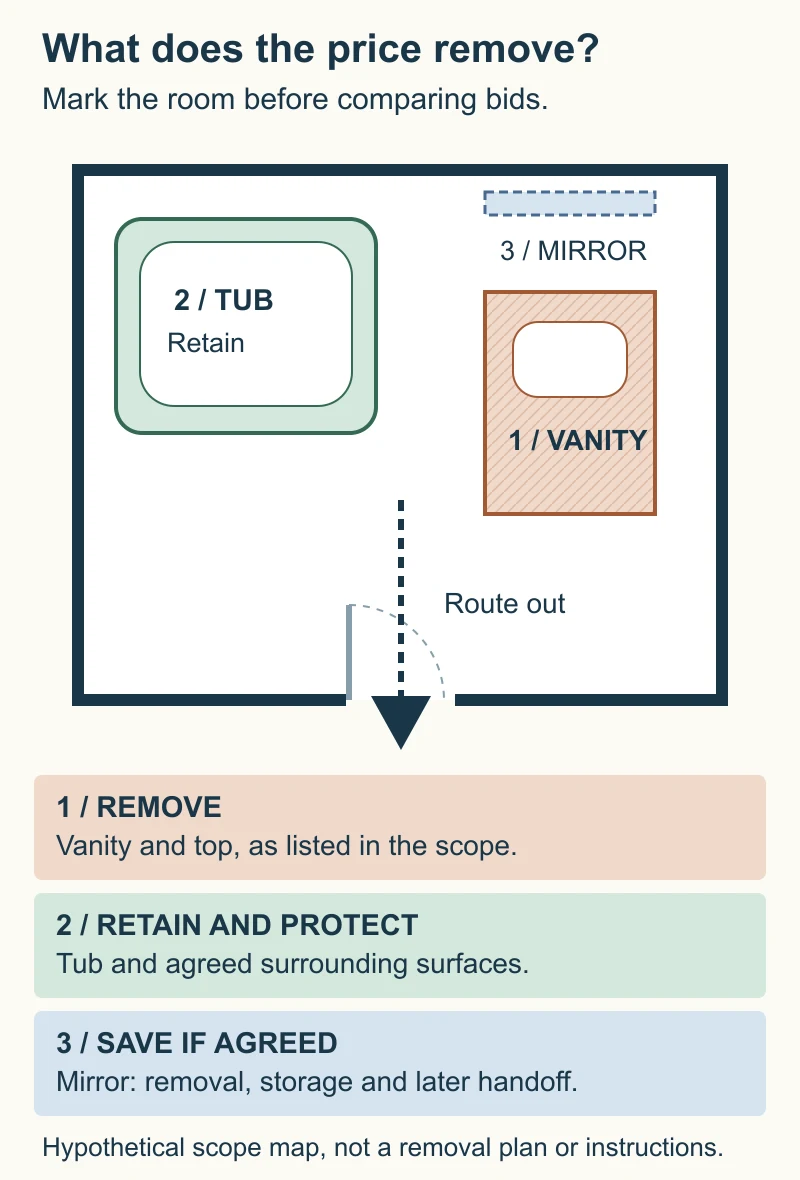
Walk the room with the contractor and label each visible item. Remove means it leaves the project. Retain and protect means it stays in service or stays in place for later use. Save for reinstallation means careful removal, storage and a later handoff—not simply leaving it beside the debris pile.
Attach those labels to photographs or a marked sketch. “Keep the tub” should also identify its enclosure, fittings, surrounding finish and protection responsibility. “Save the mirror” needs an agreed storage location and a plan if removal reveals that it cannot be reused. Agree on that decision before relying on salvage to complete the new design.
| Item or area | Write the intended outcome | Resolve before pricing |
|---|---|---|
| Vanity and sink | Remove, retain, or save the specified components. | Top, cabinet, mirror and fittings may have different outcomes. |
| Bathing area | Name the fixtures, enclosure and finish that leave or stay. | Where does removal stop, and what adjoining work remains? |
| Walls and floor | Identify the surface and the agreed removal boundary. | Does the price include only a finish, or specified layers below it? |
| Route out | Record doors, stairs, occupied rooms and the debris destination. | Protection, carrying and disposal need named responsibility. |
Define the condition left for the next trade
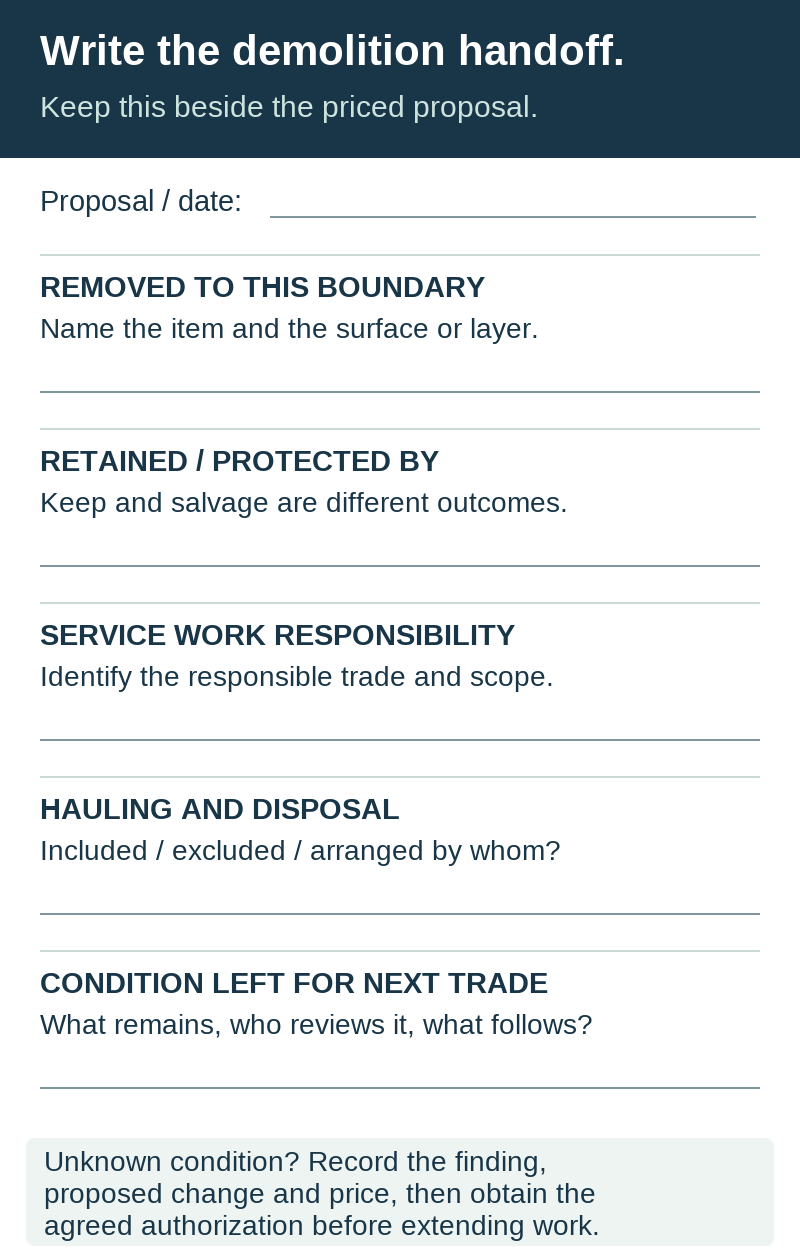
Removing tile is different from delivering a surface ready for a new finish. Removing a tub is different from repairing the floor or changing the drain. Put the actual demolition finish line into words: what has been removed, what remains exposed, who reviews it and what repair or preparation comes next.
Ask the remodeler to identify which following tasks are included elsewhere in the proposal. A missing amount is not necessarily a saving; it may be a handoff nobody priced. Conversely, do not add another removal charge to a complete remodel bid until the contractor confirms that the same work is not already included.
If the plan is a tub-to-shower conversion, keep its new base, drainage and wall assembly in the conversion scope. The demolition record describes the boundary between old and new, rather than specifying how that new system is built.
Put access, protection and debris in writing
Show the route from the bathroom to the agreed collection point. Include the actual floor level, stairs, turns and surfaces the crew will cross. Ask how those conditions are reflected in the bid instead of assuming two rooms with the same floor area require identical work.
Separate carrying debris out, hauling it away and paying disposal charges. For each, record whether the price includes it, who arranges it and how an excluded amount will be established. If a container is proposed, confirm its placement and any property or local permissions with the responsible party. Do not count an assumed municipal pickup or donation as arranged disposal.
Resolve material concerns before disturbance
A photo cannot clear an old material for demolition. EPA's asbestos guidance explains that appearance generally cannot establish whether a material contains asbestos. If suspect material may be disturbed, have the appropriate trained and accredited professional assess it; do not take a sample yourself or begin breaking it up to find out.
Also ask about painted surfaces in older homes. EPA's Renovation, Repair and Painting guidance explains the requirements for paid work disturbing paint in covered pre-1978 housing. Have the contractor establish applicability and required credentials before that work is priced and begun. A generic debris or cleanup line does not answer that question.
Keep concealed damage separate from the agreed removal price. Ask for a written process: document the finding, explain the proposed repair and price, and obtain the agreed authorization before extending the work. Mark the condition unverified rather than inventing a repair amount.
Compare a complete demolition price
Bring the marked room record, removal boundary, debris arrangements and finish-line description into the same-scope quote comparison. Ask each bidder to confirm those entries and identify exclusions. The useful question is then specific: what will this price remove, protect, carry away and hand over—and what work is still outside it?
Questions homeowners ask
How much does bathroom demolition cost?
Angi lists $300–$3,500 in its September 19, 2026 guide. Compare your actual removal, protection, debris and handoff scope with that attributed US benchmark.
Does bathroom demolition include rebuilding?
Do not assume it does. Have the proposal distinguish removing the old work from repairs, preparation and installation of the new system. Ask which following tasks are included elsewhere so they are neither missed nor charged twice.
Should disposal be included in a bathroom demolition quote?
Ask the bidder to state whether carrying, hauling and disposal charges are included or excluded. Record who arranges each and how any excluded amount will be established. An assumed pickup, container or donation is not an agreed disposal arrangement.
Can I save money by doing bathroom demolition myself?
Do not assume that removing work from the contractor’s scope creates an equal saving. First have the responsible professionals resolve material concerns, service work, protection and the condition they will accept for the next stage. Any agreed scope change and price adjustment should be written before work begins.
Sources & further reading
Primary sources support the factual points in this guide. Local rules and project requirements can change; use the linked authority for a current decision.
MAKE YOUR NEXT MOVE
Don’t overpay for your bathroom remodel.
Connect with bathroom contractors and compare the work, reviews and quote before you commit.
Check my contractor options Already have bids? Compare them here ↗